
 |
Beogradski Terijer |
|
He is not recognized by the F.C.I. |
Origin |
Serbia | |
Translation |
Francis Vandersteen | |
This breed is also known as |
Serbian Terrier
|
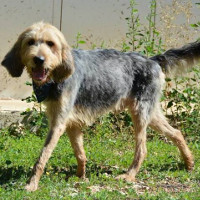
| Quite rare and little-known even in Serbia, the Belgrade Terrier has existed in various forms and under different names since antiquity, when it belonged to the common pariah group of Balkan dogs, strongly influenced by Greek Alopekis. In the Middle Ages, it was bred as a ratter and small hunting dog, but was considered a regional variant of the Balkan Terrier. There were many specialized working strains of the Balkan Terrier, commonly associated and named after the regions in which they had been bred, and by the end of the 19th century, the three surviving types could still be found, namely the Bosnian Jamar, Voivodina Pacovan and Serbian Rupar. The latter served as the basis for the development of the modern Belgrade Terrier breed. Wanting to create a tenacious vermin killer that could also be used to hunt badgers and foxes, as well as to pursue and confront them in their underground dens, many Serbian hunters decided to breed the hardier specimens of their Rupars with a few imported hunting breeds, such as a variety of Austrian and German hunting dogs and terriers. Before the 1st World War, the Serbian mountain dog, the Taurunum Dogge and the Bosnian Jamar were also used in breeding, but by the early 1930s, the ideal type had been established and the Belgrade terrier was on the way to becoming fully standardized. Unfortunately, World War II and the Nazi occupation put an end to these efforts, and the Beogradski Terijer breed never fully recovered. Few pure specimens survived the difficult war years, but in the early 1960s, some hunting enthusiasts decided to revive the breed by a steady influx of Deutscher Jagdterrier blood and also by crossbreeding with the Bosnian Barak and the increasingly popular Dachshund. However, this new incarnation of the Belgrade Terrier never really caught on and has remained very rare to this day. Over the next 20 years, a small number of Belgrade breeders apparently decided to develop a calmer, more attractive version of the breed, so they introduced Basset Hounds, Beagles, Cocker Spaniels and Poodles into their lines, creating a handsome, friendly little companion breed, rarely used as a hunter, but mainly as an urban pet. To this day, the breed has not been standardized, and a wide variety of sizes and appearances still exist. Even the name "Belgrade Terrier" can be misleading, as many people today use it to describe the Zemunac, as well as other breeds, both pure and impure. The modern variety of Belgrade Terrier no longer possesses its traditional highly motivated and serious personality, but is instead a playful and obedient pet, fond of children and tolerant of other dogs. Some authorities no longer even consider it a terrier, but the popular name remains. It should be noted that even today, there are a few working terriers of the old Rupar type found in Serbia, but they are not really taken seriously in their native country and are mainly pedigree dogs, used mainly as rural guard dogs. Similar in appearance to a smaller Basset Hound or some heavier Dachshunds and Beagles, the Belgrade Terrier is a lively breed, but not as agile as the original variety. Fairly massive and deep-chested, they have slightly elongated backs and short, sturdy legs. The head is elegant and round, with a dog-like muzzle and well-developed jaws. The ears are carried low, although they are not as long as those of the Basset Hound. Most dogs have short, smooth coats, but there are also examples of wire coats and long hair. The preferred coloring is fawn with a black "saddle" on the back and white markings on the legs, chest and belly, although many other colors exist, solid and piebald. Sizes can vary, but the ideal height is around 30.5 centimeters. |



 English (United Kingdom)

Comments