
 |
Armant |
|
He is not recognized by the F.C.I. |
Origin |
Egypt | |
Translation |
Francis Vandersteen | |
This breed is also known as |
Egyptian Sheepdog
|
A brief presentation of the Armant |
| This rare Egyptian Sheepdog is a hard-working dog that also makes an affectionate family companion. They work fearlessly and will guard their flock for life. Armants love to play when they're not working, and make excellent playmates for children. They are generally easy to train and really want to please their family. They are not overly fond of strangers and will sound the alarm if a stranger approaches their home. This breed is full of energy and needs time outdoors to play and run. They also need plenty of toys to keep them occupied when left alone. |
History of the Armant |
| The Armant originated in Egypt in the early 1900s. They were first used as guard dogs, but farmers soon realized their value as herding dogs. Many researchers believe that the Armant is a cross between the Briard and various European dogs that were brought to Egypt by Napoleon's troops. Another theory is that the breed developed over many years from Egyptian farm dogs and had no influence from the Briard. The breed was named Armant after the Egyptian city where they seemed to be most widespread. Another, less likely theory is that the Armant was developed by crossing the Bearded Collie and Newfoundland with Egyptian breeding dogs from European breeds. The town of Armant is an ancient city near Thebes, on the west bank of the Nile, in the upper region of Egypt. It was once called Hermonthis by the Greeks and was a favorite haunt of the ancient kings, supposedly the seat of the solar cult. Legend has it that the god of war, Mont, was once worshipped near Armand. Mont came in human form, but had the head of a falcon instead of a human head. This race has the fearlessness in the face of predators to match the reputation of the city from which they were named. Although they are fearless and aggressive towards predators that threaten their herd, they are docile and loving towards their family. This quality makes them a wonderful family companion and pet. The Armant is not popular enough to be recognized by the American Kennel Club, but has achieved registration status with other organizations. |
Appearance of the Armant |
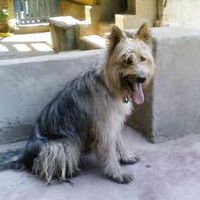
| The Armant is a typical medium-sized dog, with a larger head and a muzzle of medium size but proportionate to the head. They have round, black eyes that are small and set obliquely. Their nose is generally black, broad and has wide nostrils, though they can have a lighter-colored nose that compliments the color of their coat. Their bodies are well muscled, with deep, broad chests and powerful legs. As the breed has no very strict standards, it can have many types of floppy ears with erections. They are primarily working breeds, which means they need to be able to do the job they were created to do, without necessarily being pretty to do it. They have a shaggy coat that is medium to long and hard to the touch. The Armant is available in many different colors, but black, black and beige, gray and yellow are the most common. |
Temperament of the Armant |
| This is an extremely intelligent, highly trainable breed. They need an owner who has the time to train them well and give them the attention and exercise they deserve on a daily basis. Armants will form close bonds with their families and naturally become the guardians of your home. They thrive in a home where they have a job to do. When they're not working, they love to play with children and go for long walks. Keep plenty of toys available when you can't devote time to them, or when they can become destructive in your home. Being a sheepdog with an inbred herding instinct, they need a solid fence so they don't try to herd vehicles, bikes or neighborhood children. Early socialization will make them more receptive to new situations and people. The Armant is not known to be an aggressive dog and should work well in a multi-dog household. |
Needs and activities of the Armant |
| The Armant was used exclusively as a working dog for many years until farmers saw the advantage of having him as a companion. They need a job, and if they have nothing to do, they'll get bored and find something to occupy their time. When training Armant, they work best with positive reinforcement and treats. This is an agile breed that would do wonders in dog sports such as agility. Long daily walks or trips to the garden are also a good way to maintain them and give them the exercise they desire. |
Maintenance of the Armant |
| Armants have a coarse, medium to long coat, which is dense in the colder months and protects them from the elements when they're out with the herd. They need to be brushed once a week to keep the coat healthy and remove all traces of dirt. Use a smooth brush, a natural bristle brush or a metal brush and comb for grooming. Armants' coats aren't usually tangled, but if they're not held in place with a brush, they can become matted. Armants with longer coats need to be brushed every day or two to prevent tangling. They shed a lot and need more attention when grooming. Clean their ears every week, especially if they have floppy ears. Trim their nails every few weeks or as needed. Don't bathe the Armant often, as this could dry out their skin. When bathing the Armant, use a shampoo strictly adapted to thick coats. |



 English (United Kingdom)

Comments