Languedoc Sheepdog

He is not recognized by the F.C.I.

Origin
France
Translation
Francis Vandersteen
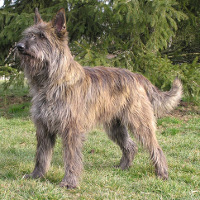
Languedoc Sheepdogs were once very popular in France, known by different names such as Berger de Camargue, Berger de la Crau and Berger des Cévennes. It is now believed that this breed must be extinct or on the verge of extinction. It was famous and used by French shepherds for breeding and herding sheep. The Berger Du Languedoc was a great herding dog that was once much admired for its breeding skills. The breed has declined in numbers simply because there are fewer sheep in the flock. They are relatively small compared with other dogs of the same class. Its height is normally between 40.5 and 51 centimeters. It has a long, shaggy coat that is fairly short to moderate in length, with shades ranging from pale yellow to black and beige. These dogs were intelligent and easy to train, but they needed to be trained and socialized from an early age. Training must be calm, consistent, firm and positive. Being a working dog, it would be sure to get a good amount of exercise to keep it happy and healthy. The Berger du Languedoc was a dog with a low excretion rate. They were also very easy to groom and needed occasional brushing to keep a clean appearance. These dogs had a life expectancy of 12 to 14 years.

This breed is a medium-sized, relatively small dog. The breed's head was rather small, well proportioned with pointed, erect ears. The muzzle was rather narrow and the nose was black. The eyes were almond-shaped, with a communicative look. He had a rather short to moderate long, shaggy coat that came in various shades of pale yellow to black and beige.

With early, positive socialization, he could have gotten along with children, but he has a herding instinct and may try to keep children and other animals at home.

The dog has a short coat that doesn't shed. The breed's short coat requires less grooming and is relatively easy to groom. It should always be kept clean by occasional bathing.

Being an extinct breed, breed-related health problems are still in the past.

He was moderately intelligent and easy to train. He requires a firm, positive and consistent trainer. He would need early socialization and obedience training.

Being a working dog, he would be sure to get a good amount of exercise to keep him happy and healthy. At the very least, he'd need a long walk.

Comments

Latest page updates

  • Telomian

    Telomian He is not recognized by the F.C.I. Origin Malaysia Translation Francis Vandersteen A brief presentation of the Telomian The Telomian is a very rare breed of dog, and the only one native to Malaysia to have been bred outside the country. They were originally bred by the indigenous people of Malaysia to combat parasites such as snakes, rats,...
  • King Wheaten -- Cavalier King Charles Spaniel X Irish Soft Coated Wheaten Terrier

    King Wheaten He is not recognized by the F.C.I. Origin Great Britain <> Ireland -> U.S.A. Translation Francis Vandersteen A brief presentation of the King Wheaten The King Wheaten is a small dog with a heart this big and a playful disposition. Borrowing the energy and soft-coated waves of the Irish Soft Coated Wheaten Terrier and the size and...
  • Spanierd -- English Springer Spaniel X German Shepherd

    Spanierd He is not recognized by the F.C.I. Origin Great Britain <> Germany -> U.S.A. Translation Francis Vandersteen A brief presentation of the Spanierd The Spanierd is a hybrid dog. Its parent breeds are the English Springer Spaniel and the German Shepherd. They have an affable personality. He's known for entertaining family and friends with his...
  • Alaskan Goldenmute -- Alaskan Malamute X Golden Retriever

    Alaskan Goldenmute He is not recognized by the F.C.I. Origin U.S.A. <> Great Britain -> U.S.A. Translation Francis Vandersteen This breed is also known as Alaskan GoldenGoldenmuteAlaskan Gold Retriever     A brief presentation of the Alaskan Goldenmute The Alaskan Goldenmute is a descendant of two great dog breeds: the Alaskan Malamute and the Golden...
  • French pointing dog Pyrenean type

    French pointing dog Pyrenean type FCI standard Nº 134 Origin France Translation Mrs. Peggy Davis Group Group 7 Pointing Dogs Section Section 1.1 Continental Pointing Dogs « Braque » Type Working With working trial Acceptance on a definitive basis by the FCI Tuesday 18 January 1955 Publication of the official valid standard Tuesday 01 August 2023 Last...
  • French pointing dog Gascogne type

    French pointing dog Gascogne type FCI standard Nº 133 Origin France Translation Mrs. Peggy Davis Group Group 7 Pointing Dogs Section Section 1.1 Continental Pointing Dogs « Braque » Type Working With working trial Acceptance on a definitive basis by the FCI Monday 17 January 1955 Publication of the official valid standard Tuesday 01 August 2023 Last...
  • Vucciriscu

    Vucciriscu He is not recognized by the F.C.I. Origin Sicily Translation Francis Vandersteen En français, cette race se dit Vucciriscu Diese Norm ist in deutscher Sprache sichtbar Vucciriscu En español, esta raza se dice Vucciriscu In het Nederlands, wordt dit ras gezegd Vucciriscu This breed is also known as Sicilian Vucciriscu Sicilian Butcher...

© 2026 Groupe Milouchouchou ASBL. Tous droits réservés. En savoir plus

Protected by Copyright01
We use cookies

We use cookies on our website. Some of them are essential for the operation of the site, while others help us to improve this site and the user experience (tracking cookies). You can decide for yourself whether you want to allow cookies or not. Please note that if you reject them, you may not be able to use all the functionalities of the site.

Ok

