
 |
Yorkeltie |
|
He is not recognized by the F.C.I. |
Origin |
Great Britain -> U.S.A. | |
Translation |
Francis Vandersteen |
A brief presentation of the Yorkeltie |
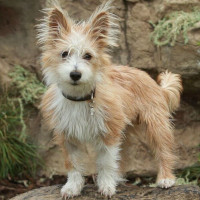
| The Yorkeltie is a hybrid dog of mixed conception. It is a very intelligent dog that is very busy. Walks and play are two very important aspects of his life. He's an excellent family dog who loves children. This little guy lives to please everyone around him. His gentle personality and loyalty make him an ideal companion. Unlike many small dogs, he is not excessively barky, but will warn if a stranger approaches or if he hears a strange noise. They measure 33 to 41 centimeters and weigh 5 to 11 kilos. |
History of the Yorkeltie |
| The Yorkeltie is a wonderful combination of the two positive qualities of its parents, the Yorkshire Terrier and the Shetland Sheepdog. |
A little of the Yorkshire Terrier |
||
| The Yorkshire Terrier may be small, but it has all the ferocity of the larger Terriers. They were bred in Yorkshire, England, to enter mines and kill rodents. Many hunters also used these dogs to chase foxes and badgers into their dens, as the Yorkshire slipped easily into the small holes of the dens. It is thought that many dog breeds were used to create the Yorkie. The Manchester Terrier, the Paisley Terrier, the Dandie Dinmont Terrier, the Maltese, the old black and tan wire-haired English Terrier and the Skye Terrier are all thought to have helped create the feisty Yorkie. In the late 1800s, the breed began to be imported from the UK to the USA, where it quickly gained in popularity. The American Kennel Club first recognized the breed in 1885, and the breed was entered in the companion dog group. | ||
 |
||
| Standard of the Yorkshire Terrier |
A little of the Shetland Sheepdog |
| The Shetland Sheepdog is also affectionately known as the Sheltie. It is a direct descendant of the Collie and originated on the Shetland Islands in Scotland. The longhaired Collie, King Charles Spaniel and Spitz dog are thought to have been used to create the Shetland Sheepdog breed. Their thick double coats helped insulate the Sheltie in Scotland's harsh climate. In the 1800s, dogs were widely bred in the Shetland Islands and sold to travelers. In 1911, the American Kennel Club recognized the Sheltie as a herding dog. |
 |
| Standard of the Shetland Sheepdog |
Appearance of the Yorkeltie |
| The Yorkeltie has a long, luxuriant double coat with a slightly wiry texture. It comes in shades of black, brown and white. Its ears resemble those of the Sheltie, but on rare occasions, some specimens have completely upright ears. Its face resembles that of a fox, with a long nose and plunging forehead. The overall appearance of this fluffy dog is elegant. Its bone structure tends to be delicate and refined. Its paws are tiny and cat-like. The dog has a modestly long, fur-covered tail that can be carried straight. Its gait is robust and purposeful. |
Temperament of the Yorkeltie |
| The Yorkeltie is a loving, affectionate dog. He loves nothing better than to be by his family's side every day. Unlike many dogs who are independent by nature, he prefers to please his master and spend every waking minute as a companion. His alertness, intelligence and love of play make him an ideal family pet. He'll be happy living in an apartment, provided he gets enough exercise every day. He gets on well with other dogs, but as with all dogs, regular socialization is essential. Obedience training and visits to the dog park will provide him with many healthy interactions. |
Needs and activities of the Yorkeltie |
| The Yorkeltie is an active breed that needs exercise. A daily walk and some playtime are usually enough to meet their needs. They often have a strong herding instinct, inherited from the Sheltie. Their herding instinct often manifests itself in the presence of young children or other pets. This breed's quick intelligence makes it an excellent choice for obedience, flyball or agility. He loves to learn new things and is happiest when working alongside his beloved master. He'll also be happiest if he spends enough time outdoors, so make sure you devote time to him every day. |
Maintenance of the Yorkeltie |
| Daily brushing is essential to keep the Yorkeltie's coat tangle-free. It has a very thick undercoat that it blows out twice a year, allowing it to produce a lot of excess fur. In general, he needs a bath once a month to keep his coat in tip-top shape. Brushing his teeth several times a week helps prevent doggy breath and remove plaque. His active lifestyle naturally wears down his nails, but if this is not the case, it may be necessary to trim them. His upright ears may contain dirt and debris in the flaps, so wiping them with a washcloth will help keep them clean. |



 English (United Kingdom)

Comments