
 |
Yorkie Pin |
|
He is not recognized by the F.C.I. |
Origin |
Great Britain <> Germany -> U.S.A. | |
Translation |
Francis Vandersteen |
A brief presentation of the Yorkie Pin |
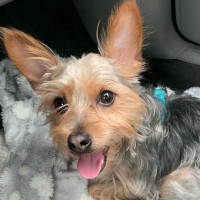
| The Yorkie Pin is a lively hybrid dog whose toy-like appearance conceals its origins as a born hunter and strategist. A rat terror, the Yorkie Pin is descended from two breeds that were created for the express purpose of hunting rats: the Miniature Pinscher and the Yorkshire Terrier. Due to the presence of two very different-looking parents, Yorkie Pins can have a wide variety of physical appearances. But what tends to be constant in this breed is its energetic, friendly manner, combined with its intelligent personality and adventurous spirit. Yorkie Pins can be stubborn dogs, and their adventurous spirit can make them difficult to handle at times, but they are nonetheless affectionate, loving dogs that make great additions to families as well as excellent mouse hunters if properly trained. |
History of the Yorkie Pin |
| As a designer dog breed, Yorkie Pins are not as well known as many other breeds due to their recent appearance on the scene. The tendency to mix various dog breeds in order to extrapolate their most desirable traits into a single dog has really taken off in the last 30 years or so. More likely than not, the Yorkie Pin was first bred in the late '80s, early '90s, as is the case with many designer dog breeds. But other than the little information that can be gained from conjecture, not much is known about our friendly Yorkie Pin neighbors. The Yorkshire Terrier and the Miniature Pinscher, on the other hand, are far better known than their hybrid offspring, and an examination of their pasts can help illuminate the somewhat ambiguous existence of the Yorkie Pin. Indeed, the Yorkie Pin still possesses the Yorkshire Terrier's instinct for rat removal, as Yorkie Pins tend to pursue small creatures in their vicinity. Yorkie Pins also get a double dose of this rat-hunting instinct from their Miniature Pinscher parents. |
A little of the Yorkshire Terrier |
||
| The Yorkshire Terrier may be small, but it has all the ferocity of the larger Terriers. They were bred in Yorkshire, England, to enter mines and kill rodents. Many hunters also used these dogs to chase foxes and badgers into their dens, as the Yorkshire slipped easily into the small holes of the dens. It is thought that many dog breeds were used to create the Yorkie. The Manchester Terrier, the Paisley Terrier, the Dandie Dinmont Terrier, the Maltese, the old black and tan wire-haired English Terrier and the Skye Terrier are all thought to have helped create the feisty Yorkie. In the late 1800s, the breed began to be imported from the UK to the U.S.A., where it quickly gained popularity. The American Kennel Club first recognized the breed in 1885, and the breed was entered in the companion dog group. | ||
 |
||
| Standard of the Yorkshire Terrier |
A little of the Miniature Pinscher |
| The Miniature Pinscher is also a renowned rat hunter, whose skills were so sharp that the American Kennel Club recognized the Mini Pin's exceptional abilities in 1925. The origins of the Miniature Pinscher are also steeped in mystery, as its exact date of birth is a matter of debate, but its irrefutable rat-hunting instincts have served it well throughout its life and, combined with the Yorkie's skills, will help the Yorkie Pin stand out as a deft hunter and lovable companion. |
 |
| Standard of the Miniature Pinscher |
Appearance of the Yorkie Pin |
| Designer dog breeds, and hybrid dog breeds in general, tend to have very varied appearances, based on the degree to which one of their parents' genes has been adopted over the other. This is an interesting and fascinating phenomenon in dogs, which can allow several puppies from the same litter to have significantly different physical traits and appearances. Yorkie Pins will always be small, compact dogs like their two parents, and their steady brown eyes will always greet you with kindness and curiosity, but their coats and ear shapes can be very different depending on which parent's genes came through most strongly. Yorkie Pins also seem to consistently possess black and brown coats, with an occasional light touch of white fur, which helps to give their breed a more distinct mark, but the rest is left to genetics; Yorkie Pins may have longer, puffier coats like the Yorkshire Terrier, with dagger-shaped Yorkie ears, or they may have a shorter, smoother coat with longer, more angular ears like the Miniature Pinscher. Yorkie Pins will always look cute and inviting whichever option you choose, but the differences in appearance, which can be considerable, are very interesting. |
Temperament of the Yorkie Pin |
| The Yorkie Pin is one of those typically pugnacious breeds that have a great attitude despite their small size. Yorkie Pins are heralds of good times and affectionate play, but they can also be quite stubborn and tend to get into trouble when left unattended. Speaking of which, the Yorkie Pin is a very sociable dog who likes to be the main attraction at the party. The downside, for some potential owners, is that Yorkie Pins absolutely cannot stand to be alone; they will panic, become anxious and act frantically if they start to feel abandoned, so homes unable to consistently provide company for the Yorkie Pin will not make a good home for this breed. Despite the Yorkie Pin's confident, independent behavior, it will need constant supervision to ensure it doesn't get into trouble or start to feel abandoned. |
Needs and activities of the Yorkie Pin |
| Being smaller, more compact dogs by nature, the Yorkie Pin doesn't have an excessive amount of energy right from the start. But considering that the Yorkie Pin is a breed of hybrid design, there are some other factors to consider as well. As we mentioned earlier, many designer breeds can end up inheriting traits and resembling one parent more than the other. This factor determines whether designer breeds like the Yorkie Pin will favor its first parent, the Yorkshire Terrier, and need around 30 minutes of physical activity a day, or whether it will favor its other parent, the Miniature Pinscher, and need 60 minutes of playtime a day. Whichever parent the Yorkie Pin most resembles, your goal should be to cover an estimated 10 km of walking distance per week if you want the Yorkie Pin to stay in tip-top shape. |
Maintenance of the Yorkie Pin |
| The Yorkie Pin's coat is another factor that is strongly determined by which of its two parents the dog in question prefers most. There are Yorkie Pins with short coats that have been borrowed from the Miniature Pinscher and will only need grooming once a week with pin and slicker brushes, and then there are Yorkie Pins with longer coats, like their Yorkshire Terrier parents, that will need daily grooming with a comb and pin brush. Designer breeds often exhibit this tendency towards genetic disclosure to an extreme degree, so experienced dog owners will probably be prepared for both scenarios. But the inexperienced owner would do well to try to anticipate the needs of their newborn Yorkie Pin long before it has set a paw in your home. New, inexperienced or uncomfortable dog owners should never attempt to trim a dog's nails without guidance, knowledge and confidence. |



 English (United Kingdom)

Comments