
 |
Dachsador |
|
He is not recognized by the F.C.I. |
Origin |
Germany <> Canada -> U.S.A. | |
Translation |
Francis Vandersteen | |
This breed is also known as |
Doxador
|
A brief presentation of the Dachsador |
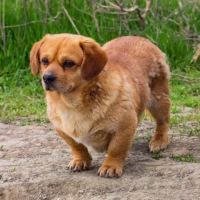
| The Dachsador is an unusual-looking dog, somewhat resembling a Labrador Retriever that has shrunk in the wash. They have the long back and stocky limbs of the Dachshund, although their bodies are more robust and their head much more like that of their Labrador Retriever parent. Gentle, good-natured and affectionate, Dachsadors like to be social with their family and always seem to have a smile on their face. Loyal dogs, they form close bonds with their immediate family but tend to get on well with almost everyone they meet. |
History of the Dachsador |
| Also known as the Doxador or Weinerdor, the Dachsador is a charming mix of Labrador Retriever and cheeky little Dachshund. Two totally different dogs in terms of physical appearance, the creation of the Dachsador proves that there really are no limits when it comes to developing new hybrid breeds. |
A little of the Dachshund |
||
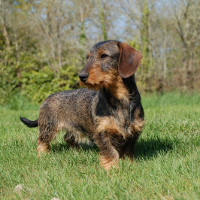
| The Dachshund is one of the most recognizable pure breeds in existence, with its long hound-like ears, pleading eyes, elongated back and fleshy legs. This sausage dog, as it's also known, has delighted owners with its cute looks and bubbly personality since the early 18th century. Not everyone realizes that these unusually shaped dogs were intentionally bred as working dogs. They hunted prey, such as foxes and wild boar, and were always courageous in their pursuits. Although originally from Germany, these dogs are now popular pets all over the world. Owners appreciate the fact that they come in smooth-coated, wire-coated and longhaired variants. | ||
 |
||
| Standard of the Dachshund | ||
A little of the Labrador Retriever |
||
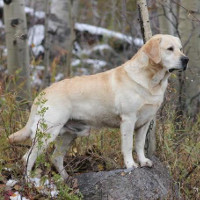
| Labrador Retrievers often top the list when it comes to determining the most popular dog breed, a phenomenon that is true the world over. This is largely due to their easy-going personalities and a tail that never seems to stop wagging. Labradors are a Canadian breed, originating from Newfoundland and other water dogs. Hunters have always prized them for their superior sense of smell, supple mouth and ability to retrieve prey, whether in or out of the water. They also made wonderful companions when traveling on boats and were impeccable workers who never complained, always eager to please. Today, the Kennel Club recognizes three colors: black, chocolate and yellow. They are regularly used as service dogs, especially guide dogs, as they are easy to train and food-motivated. | ||
 |
||
| Standard of the Labrador Retriever |
Appearance of the Dachsador |
| The Dachsador seems to defy physics and has a rather abnormal body shape with an overly long back and strangely short limbs. Their heads can sometimes seem out of proportion to their bodies, especially if they inherit the Labrador's broader skull. Dogs will often have the Dachshund's longer muzzle, ending in a shiny black nose. Their eyes are dark brown, representing a kind, gentle expression. Their ears droop and move forward, framing the outside of their face. They have a long, slender tail that may end in a small tuft of fur. Most dogs are larger and stockier than the Dachshund, but nowhere near as big as the Labrador. Typical heights range from around 30 to 50 cm. When fully grown, adults will weigh between 13 and 18 kg. The Dachsador's coat can be composed of several colors, including fawn and gold, but tends to be black or dark brown. The fur is short and stiff, with light feathering often visible on the tail. |
Temperament of the Dachsador |
| A fun dog to interact with, the Dachsador is a pleasure to live with and is content with very little. They enjoy social interaction and are cuddly and affectionate. As long as the Dachsador is introduced to small children and other pets in their first months of life, they should make great friends with both two- and four-legged family members and tend to be extremely tolerant of even the youngest children. Outgoing and interested in their surroundings, Dachsadors are not shy and will take a passionate interest in the world around them. As they seem to love everyone they meet, they are surprisingly poor guard or defense dogs. Although fond of real people, Dachsadors are well balanced and rarely fear separation. As a rule, they do not develop the behavioral problems that afflict many other breeds, as they are generally gentle and simply like to go with the flow. |
Needs and activities of the Dachsador |
| The Dachsador loves to be on the move. He can cope in most climates, but when you're out in cold weather, you may choose to give him a little extra warmth in the form of a sweater or coat. He'll want to be outside whatever the weather, but shouldn't be left out in the cold. Keen to meet and greet, your Dachsador will enjoy at least two walks a day. Obedience classes will give him the opportunity to show his intelligence. Apartment living is possible as long as there aren't many stairs, and a house with a secure yard is ideal, but as with all dogs, don't leave him unsupervised. Don't forget that he's a hunter and digger at heart, and may want to start hunting if he sees something interesting. |
Maintenance of the Dachsador |
| The Dachsador is not considered a hypoallergenic breed and will shed moderately. It is recommended to brush it daily for 10 to 15 minutes with a rubber or smooth bristle brush that glides gently over the coat while pulling out loose hairs. This hybrid can enjoy a swim from time to time, so be sure to check the ears regularly for excessive moisture. Teeth and nails are an important part of grooming. To avoid periodontal disease and tooth loss, brush your Dachsador's teeth at least 3 times a week with a veterinarian-approved toothpaste. Trim nails as needed, usually every few weeks. |



 English (United Kingdom)

Comments