 |
Labrottie |
|
He is not recognized by the F.C.I. |
Origin |
Canada <> Germany -> U.S.A. | |
Translation |
Francis Vandersteen | |
This breed is also known as |
Rottwador |
A brief presentation of the Labrottie |
| A relatively popular hybrid, this Labrador-Rottweiler cross is now widely seen around the world. The Labrottie is a large, robust dog with a dense double coat. Its short coat is often black or black and beige, but can also be gray or brown. Superb watchdogs and defenders, Labrotties are fiercely protective of their family and always trusting. They maintain close bonds with all members of the household, but can sometimes become too dependent on them. Providing them with plenty of physical and mental activity can help prevent the development of separation anxiety. |
History of the Labrottie |
| A new hybrid dog breed, the Labrottie is a cross between the popular Labrador Retriever and the much-loved Rottweiler. Like many of these specific cross-breed dogs that have appeared in recent decades, their history is unclear, and it's likely that many breeders and owners around the world have bred Labrotties independently. The Labrottie is also known as the Rottwador and is known for its big personality and protective nature. Although the American Canine Hybrid Club recognizes this breed, they are not yet members of the American Kennel Club or any other major club. |
A little of the Labrador Retriever |
||
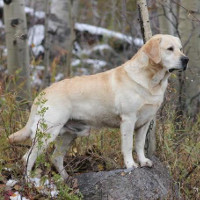
| Despite its name, the Labrador Retriever is not native to Labrador, but is thought to have originated in Newfoundland. Most agree that its ancestor is the St. John's Water Dog, an extinct breed originally from Newfoundland and anecdotally more at home in the water than on land. Historically, the Labrador Retriever was used to hunt on both dry and wet land, making it a favorite of local fishermen. Of course, many still use the Labrador Retriever for this purpose today, although the breed has developed into a multitude of other disciplines. Labrador Retrievers can be seen as therapy dogs, guide dogs for the blind and even drug detectors at airports and ferry terminals. In fact, the Labrador Retriever is such a successful breed that it now features in the top ten list of popular dogs in many countries around the world. | ||
 |
||
| Standard of the Labrador Retriever | ||
A little of the Rottweiler |
||
| Robust and sturdy, Rottweilers are among the most imposing breeds suitable for life as a family pet. The breed's history can be traced back to Roman times, when it was used as a livestock guard and hunting dog, roles for which it has been honed over the millennia. Thanks to their training, proper socialization and solid condition, Rotties make loving family pets that protect their loved ones from all comers. However, it's very important that these noble instincts are channeled and controlled, as aggression and inappropriate dominance behaviors are common in poorly trained individuals. | ||
 |
||
| Standard of the Rottweiler |
Appearance of the Labrottie |
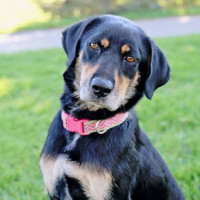
| As is the norm for mixed breeds, it can be very difficult to predict what a Labrottie puppy will look like when older, as some will show more of their Labrador genes, while others will be more like Rottweilers. A broad, muscular dog with a powerful chest and athletic limbs, the Labrottie is built for strength and endurance. Although there is variation between dogs of the breed, the general rule is that most dogs will have a head that resembles a Labrador and a body that is highly suggestive of their Rottweiler parent. Their round eyes are alert and watchful, and can be either brown, amber or green. Their triangular ears are medium-sized and rest close to the face. Their large nose can be brown or black. Labrottie fur can be black, beige, black and beige or gray. Their coat is thick and short. Weighing between 30 and 50 kg, these dogs grow to a substantial size once they reach maturity. At adulthood, a dog will reach a height of between 61 and 69 cm. |
Temperament of the Labrottie |
| Some describe the creation of a hybrid dog as a gamble, as their personalities are highly variable. In general, it's true that most Labrotties are calm and loyal, with close family ties and lots of energy. Most Labrotties are naturally protective and see it as their duty to protect their home and family. They will always be alert when they return home, and will alert their owner to any new arrival by barking loudly. Territorial behavior can be a challenge when the dog continues to bark, even after their owner has assured them that the new arrival is welcome. Early training and socialization can help combat this potential problem. Aggression is rare and almost never provoked. A breed that loves human companionship, some dogs can become overly dependent on their owners and become too needy. In the most severe cases, this behavior can evolve into generalized separation anxiety, preventing the dog from being left alone. Labrottie is not recommended for owners who spend much of their time away from home. Socialization with other dogs and children tends to go well, and should begin as early in the puppy's life as possible. Acceptance of small furry animals, such as rabbits or guinea pigs, is much less likely, and there is a real risk that Labrotties will go into hunting mode in their presence. |
Needs and activities of the Labrottie |
| Labrotties need plenty of regular activity for their physical and mental health. The hybrid will generally be relatively inactive indoors, but will enjoy a long brisk walk with its humans or time to play outside in a fenced yard. Interactive games are also popular with Labrotties, who will enjoy retrieving and returning a ball to their human. It's important to check the temperature because, with its double layer, the Labrottie can overheat at high temperatures. |
Maintenance of the Labrottie |
| The type of grooming required for your Labrottie varies according to the coat it inherits from its parent breeds. Labradors generally shed heavily, while Rottweilers shed very little, if at all. Hybrid dogs will have a medium to long coat that is shed occasionally and may be shed on a more seasonal basis. Depending on the dog's coat, it may need to be brushed every other day or once a week. A firm bristle brush will help remove loose hairs, and will also help distribute the oils from his skin. Bathing should take place once a month or every two months. If your Labrottie's nails don't wear naturally, they should be trimmed if necessary. As with any dog, it's advisable to brush his teeth several times a week to maintain long-term dental health. |



 English (United Kingdom)

Comments