 |
Mastidoodle |
|
He is not recognized by the F.C.I. |
Origin |
Great-Britain <> France -> U.S.A. | |
Translation |
Francis Vandersteen | |
This breed is also known as |
Mastipoo |
A brief presentation of the Mastidoodle |
| Crossing the formidable Mastiff with the versatile Poodle was virtually inevitable in the world of specific crossbreeding dogs, and the result was a pleasing new hybrid with an easygoing personality and docile nature called Mastidoodle or Mastipoo. When describing Mastidoodle, the words giant and teddy bear come to mind. In fact, teddy bear is an apt description of these curly-furred dogs who are affectionate and loyal to their families and enjoy plenty of cuddle time. Those with young children will be delighted by the strong bonds the Mastidoodle usually forms with them, but must be sure to monitor interactions at all times given their sheer size. |
History of the Mastidoodle |
| Probably developed over the last 20 years or so, Americans have claimed the Mastidoodle as their own. Given their short history, to learn more about the Mastidoodle, we should take a closer look at each parent breed, the English Mastiff and Standard Poodle. |
A little of the Mastiff |
||
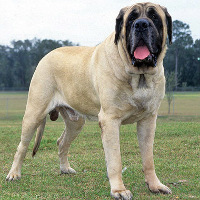
| English Mastiffs are impressive dogs, renowned for their giant skulls and ability to weigh over 100 kg. Mastiffs are descended from an ancient type of dog called Molossers, large, muscular Asian working dogs. They were employed by men to guard their property and work alongside their livestock, toiling to earn a living. Some dogs would inevitably have been used for fighting, both in warfare and in the dog fights of ancient times. Inevitably, over time, Mastiff descendants became less popular with the advent of technology, which rendered them obsolete as working animals, and the ban on dog fighting, which meant they could no longer be used for barbaric purposes. By the 1800s, the number of breeds was low, but a number of breed enthusiasts worked hard to maintain the lineage and ensured they only chose the best specimens to breed. | ||
 |
||
| Standard of the Mastiff | ||
A little of the Poodle |
||
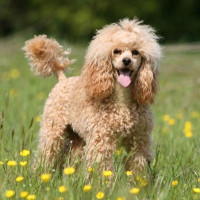
| The Poodle is one of the main players in the new world of hybrid dogs and is renowned for its versatility. An intelligent dog that excels in many disciplines, the Poodle is not only an excellent pet, but can also compete successfully in events such as agility and flyball. The general public tends to associate the Poodle and its hairstyle with France, but the truth is that it's a German breed. Despite their glamorous appearance, they were originally bred to hunt and retrieve waterfowl and have always been fantastic swimmers. The Poodle is available in three sizes: Toy, Miniature and Standard, although it is the larger Standard Poodle that contributes to the Airedoodle breed. Poodles are recognized by the Kennel Club within their public service group. | ||
 |
||
| Standard of the Poodle |
Appearance of the Mastidoodle |
| The Mastidoodle's most remarkable feature is its stature, reaching staggering heights of 63 to 76 cm. Although not as robustly built as the Mastiff, Mastidoodles are still well muscled and can weigh between 30 and 45 kg. They have large heads and skulls, thick necks and strong, sturdy limbs. They have large ears that hang close to the face and medium-sized dark noses. Their eyes are generally dark brown and circular, set deep into the skull. The Mastidoodle's coat is generally quite dense and curly, resembling its Poodle relative more than the Mastiff. There are a number of potential coat colors, including cream, fawn, brown, red, gray and black, with some individuals having more than one solid coat color. |
Temperament of the Mastidoodle |
| Balanced and confident, it takes a lot to unnerve a Mastidoodle, and these dogs are very tolerant in most situations. Although some people may initially be intimidated by their size, they are gentle souls who like to be close to their families and are generally very affectionate. Good watchdogs, the Mastidoodle is always alert and will be the first to know of new arrivals at home, letting out a series of deep barks to let everyone know. Generally, this is a show of bravery, and most members of the breed are not hostile, settling in as soon as they see that the new guest has been accepted. Owners of Mastidoodles may face a potential problem of separation anxiety and boredom. They require constant attention and don't like to be left alone for too long. Owners can try to prevent the development of vices by ensuring that dogs are well trained and not at risk of boredom. Failure to do so can mean returning home to tidy up or repair damaged furniture and doors after each outing. |
Needs and activities of the Mastidoodle |
| The Standard Poodle is an active, agile and athletic breed, while the Mastiff is only moderately active. The Mastidoodle is likely to fall somewhere in the middle as far as activity levels are concerned. The Mastidoodle can enjoy activities such as tug-of-war, long walks, short runs and recreation in dog parks. They are suitable for all homes and lifestyles, as long as they have plenty of space to play and rest. They may not be suitable for small apartments due to lack of space. |
Maintenance of the Mastidoodle |
| The Standard Poodle is considered one of the high-maintenance dog breeds when it comes to grooming. Most Mastidoodles tend to retain the thick, dense wavy coat of the Standard Poodle. So they may be hypoallergenic and low-sweat. But don't expect grooming to be cheap or easy. The Mastidoodle will need to be groomed approximately every 6 to 12 weeks, depending on where you live and the climate. During the summer months, some Mastidoodles may need to be groomed every 4 weeks to keep them cool. In addition to grooming, Mastidoodles should have their teeth brushed every week, their nails trimmed every six weeks, and their ears cleaned and checked for signs of infection. |



 English (United Kingdom)

Comments