 |
Yorwich |
|
He is not recognized by the F.C.I. |
Origin |
Great Britain -> U.S.A. | |
Translation |
Francis Vandersteen |
A brief presentation of the Yorwich |
| The Yorwich is a small, shaggy dog resulting from the crossing of a Yorkshire Terrier and a Norwich Terrier. This hybrid weighs between 2.5 and 3.5 kilos, and stands 23 to 25.5 centimeters tall. Its coat is straight and of medium length, and is brown, fawn, black or a combination of these colors. These dogs are great with children and other animals; they're always looking for friends to play with. Yorwiches are affectionate, courageous and energetic. They adapt well to apartment living, but are not at home in cold climates. |
History of the Yorwich |
| The Yorwich is a cross between a Yorkshire Terrier and a Norwich Terrier. Like most hybrid dogs, their place and date of origin are not known. |
A little of the Yorkshire Terrier |
||
| The Yorkshire Terrier is descended from the Clydesdale or Paisley Terrier, a breed that was introduced to Yorkshire by Scottish workers. These dogs, larger than the Yorkshire, were used to get rid of rats in factories. Clydesdales have been crossed with other Terriers, such as the English Black and the Skye Terrier. The Waterside Terrier, a small dog with a gray coat, may also have contributed to the development of the Yorkshire Terrier. The Yorkshire, or Yorkie, was originally known as the Scottish Wirehaired Terrier. In 1870, the breed was named Yorkshire Terrier, after the county in which it developed. The Yorkshire Terrier was first recognized by the American Kennel Club in 1885. | ||
 |
||
| Standard of the Yorkshire Terrier | ||
A little of the Norwich Terrier |
||
| The Norwich Terrier is one of the oldest breeds. It originated in England and is related to the Norfolk Terrier. Several breeds, such as the Irish Terrier, played a role in the breed's development. In the late 1800s, a breed called the Trumpington Terrier was created by crossing a Cantab Terrier with a brindle hybrid. These Trumpington Terriers were crossed with Glen of Imaal Terriers, giving rise to the Norwich Terrier, which was known as the Jones Terrier. These dogs were used to hunt vermin, and when the breed arrived in the United States, people began using them to drive foxes from their dens. The Norwich Terrier became increasingly popular in the United States, and many hunters began importing these dogs for fox hunting. The Norwich Terrier was recognized by the American Kennel Club in 1979. | ||
 |
||
| Standard of the Norwich Terrier |
Appearance of the Yorwich |
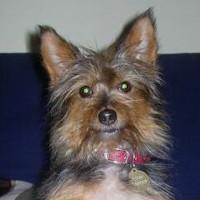
| The Yorwich is a Toy-type hybrid dog that weighs between 2.5 and 3.5 kilos, and stands 23 to 25.5 centimeters tall. It has a compact, medium-length body, narrow legs and small feet. Its head is slightly rounded, with a tapered muzzle, black-rimmed lips and a small, pointed black nose. His eyes are round, black-rimmed and soft. His ears are straight and pointed. His coat is straight, of medium length and can be harsh or silky, depending on which parent he takes after most. The coat can be tan, brown, black or a combination of these colors. |
Temperament of the Yorwich |
| The Yorwich is an affectionate, playful and friendly dog. They are loyal, eager to please and quite intelligent. As a result, they're easy to train, but may need a little time to get used to routine. These dogs get on very well with children, as they are very playful and gentle; he will be very happy to play with your children. He has nothing against being left alone, but give him toys to keep him entertained while you're away, so he doesn't bite your things or engage in other destructive behaviors. The Yorwich likes to snuggle, run and play, and may also have a taste for hunting. This hybrid dog is generally assertive, but rarely confrontational. |
Needs and activities of the Yorwich |
| The Yorwich doesn't need much activity. It's an active dog that loves to go for walks, participate in games around the house or go to a park to run around off-leash. A short 15-20 minute walk will keep him happy and fit. Set aside some time to play with him; he'll be delighted to play ball or rope. These dogs adapt well to life in an apartment, but it's a good idea to take him out for a walk or to a park every day to keep him as happy as possible. It's important to bear in mind that the Yorwich doesn't do well in cold climates; it prefers warmer weather. When temperatures are cold, make sure he wears a warm jacket or sweater, and limit his exposure to the elements. |
Maintenance of the Yorwich |
| The Yorwich is a hypoallergenic dog that doesn't shed much, making it ideal for allergy sufferers. It has a straight, medium-length coat that can be brushed weekly with a long-hair brush. You may need to trim the hair around his eyes, ears and legs to avoid infection. Clean his ears weekly, using absorbent cotton and ear cleaning fluid. Also, as this hybrid is prone to dental problems, daily brushing is recommended. He doesn't often smell bad, so bathing him once a month will keep him clean and his skin healthy. Also, trim his nails once or twice a month, depending on how worn they are. |



 English (United Kingdom)

Comments