
 |
Akita Chow |
|
He is not recognized by the F.C.I. |
Origin |
Japan <> China -> U.S.A. | |
Translation |
Francis Vandersteen | |
This breed is also known as |
Akchow |
A brief presentation of the Akita Chow |
| The Akita Chow is a cross between the Akita Inu and the Chow Chow. A large dog, the Akita Chow can weigh an average of 40 to 66 kilos and stand 58.5 to 63.5 centimeters tall, depending on the size of its parents. The hybrid's coat is long, straight and considerably thick, and comes in brown, red, black, fawn, silver and white. The Akita Chow is typically loyal, calm and independent, with a tendency to be possessive of its masters and indifferent to those it doesn't know. Sometimes stubborn, the Akita Chow will do best with an owner who is willing to develop a strong relationship through education. |
History of the Akita Chow |
| The hybrid Akita Chow is a new breed of dog with no detailed history. However, the two breeds that combine to form the Akita Chow have centuries of history. |
A little of the Akita Inu |
||
| The Akita Inu ancestors were called Matagi Inu, which means hunting dog. Dogs of this breed were often used as fighting dogs in the late 1800s, and were crossed with other breeds to improve their fighting ability. In 1927, the Akita-Inu Hozonkai Society of Japan was founded to preserve the original Akita Inu, and in 1931, the breed was designated a national treasure of Japan. The dog became more common in the United States after World War II, when soldiers returned with their dogs from service in Japan. Akita Inu often work as guard dogs or as part of the law enforcement force. | ||
 |
||
| Standard of the Akita Inu | ||
A little of the Chow Chow |
||
| The bone structure of the Chow Chow is similar to that of the oldest fossilized remains of dogs dating back millions of years. It is thought that the Chow Chow was originally used as a temple guard dog and for hunting, especially by the nobility. As imperial hunting declined, so did the number of Chow Chows. There are stories of the Chow Chow being used for food and fur in Mongolia and Manchuria. The breed received its name in the late 18th century, when dogs arrived in England from China; the name is said to derive from a word meaning oriental trinket, as the dogs were listed as such in the ship's log. Other examples of the breed were imported to England and then to the United States in the late 1800s, finally gaining popularity in the U.S. in the 1980s. | ||
 |
||
| Standard of the Chow Chow |
Appearance of the Akita Chow |
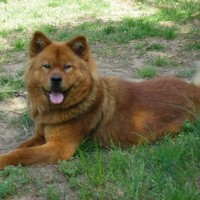
| The Akita Chow is a hybrid of the Akita Inu and the Chow Chow, weighing on average between 40 and 66 kilos and measuring between 58.5 and 63.5 centimeters, depending on the size of its parents. Like its parents, the Akita Chow's body is strong and robust, and of great size. Majestic and attractive, grooming will be important as both parents have thick coats. The Akita Chow's coat is long, straight and thick, and comes in fawn, silver, white, brown, red and black. The Akita Chow tends to have a round face with almond-shaped eyes. The tip of its nose is black and its head features upright ears. |
Temperament of the Akita Chow |
| Like its parents, the Akita Chow is independent and can even be obstinate. They are intelligent, very loyal and possessive of their owners, but are not known for being overly affectionate. If you prefer a dog that doesn't jump on you or lick your face, the Akita Chow is a good choice. Akita Chows are protective dogs and can, therefore, have a dominant behavior on humans and animals. If not properly socialized, they will be aggressive towards strangers, with whom they are generally uncomfortable. Caution should be exercised when your dog is around children, due to its large size and authoritarian tendencies. Older children can be taught to stand their ground with kindness but firmness, while younger ones may feel shy and a little overwhelmed by this large breed, which can sometimes be quite noticeable. |
Needs and activities of the Akita Chow |
| The Akita Chow is a large, independent-thinking dog. He'll need plenty of daily exercise. He'll appreciate a long run or a walk on a leash. It will be useful to have a fenced-in yard where he can run and play to his heart's content in complete safety. While the Akita Inu is a very energetic dog, the Chow Chow tends to be a little lazy; your Akita Chow can fall anywhere on this continuum. No matter how motivated, or unmotivated, your Akita Chow is to exercise, he needs it to stay healthy. |
Maintenance of the Akita Chow |
| The Akita Chow's thick coat needs regular brushing, 3 to 4 times a week, to keep it clean and healthy. Your Akita Chow's nails should be trimmed if necessary and its teeth brushed regularly to ensure long-term dental health. As the Akita Chow can be stubborn, training can be difficult. A training program based on reward and positive reinforcement can begin as soon as you bring your young dog home. Socializing your Akita Chow is also important. It's best to socialize him first with a small group before introducing him to larger groups. Use touch and treats to reinforce positive behavior in the presence of others and help him accept people and dogs. It's also important to teach your Akita Chow obedience. You can start by teaching your dog to accept your guidance. This will help him feel more confident that someone else is in charge, and help him think before showing aggressive behavior. |



 English (United Kingdom)

Comments