 |
Belgian Shepadoodle |
|
He is not recognized by the F.C.I. |
Origin |
Belgium <> France -> U.S.A. | |
Translation |
Francis Vandersteen | |
This breed is also known as |
Belgian Sheepdoodle |
A brief presentation of the Belgian Shepadoodle |
| The Belgian Shepadoodle is an intelligent, energetic and protective breed. Both parent breeds are active and require plenty of exercise, affection and challenge, with the Belgian Shepherd parent providing the most aggressive personality traits. The Belgian Shepherd originally comes from Belgium, while the Poodle has its origins in Germany and France. The Poodle parent provides the highest maintenance for grooming, not necessarily because of shedding, but more because it requires more frequent trips to the groomer, while the Belgian Shepherd parent contributes a moderate level of maintenance for grooming. This hybrid can be an excellent addition to any family, provided adequate exercise and mental challenge can be included in their daily diet. They are excellent watchdogs and family protectors, and can sometimes seem telepathic in their ability to read and detect the body language signals of their human family. Puppies should be introduced to strangers and other animals with care and early in their training to ensure sufficient socialization as they grow. |
History of the Belgian Shepadoodle |
| The Belgian Shepadoodle is a relatively new hybrid and there is little history of the hybrid breed itself. The breed is the result of a cross between the Belgian Shepherd Dog (Groenendael) and the Standard Poodle. |
A little of the Belgian Shepherd dog |
||
| The Belgian Shepherd originated in Belgium and can be traced back to the 1800s as a breed known for its ability to herd livestock and provide security and protection for the family and farm. His strong work ethic made him perfect for this role, and today he can be found excelling in police work as well as in the family home. The Belgian Shepherd we see today was developed by Nicholas Rose at his kennel, which began in 1893. Belgian Shepherd dogs from this kennel, during the Second World War, became messengers, guard dogs and personalized agents. These traits remain strong in the parent Belgian Shepherd breed. The AKC does not recognize the Belgian Shepherd itself as a breed, but rather has determined that the breed has four varieties that they consider distinct breeds. These varieties are the Belgian Groenendael (black longhair), the Belgian Tervuren (fawn/mahogany longhair), the Belgian Malinois (fawn/mahogany shorthair) and the Belgian Laekenois (fawn wirehair). The Belgian Groenendael was crossed with the Standard Poodle to create this hybrid. | ||
 |
||
| Standard of the Belgian Shepherd dog | ||
A little of the Poodle |
||
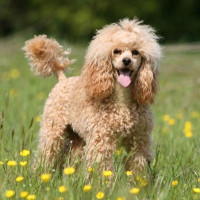
| The Standard Poodle side of the Belgian Shepadoodle is more than down and fur. The first species of Poodle was actually a water dog, a kind of retriever. Although the exact origin of the Poodle breed is not known, it is known to date back to the 1400s and was used in hunting and retrieving, as well as being quite adaptable as companions in Germany and France. It is one of the oldest breeds recognized by the American Kennel Club. Its popularity continues to grow in the USA and abroad, with a number 7 ranking on the AKC's popularity list. | ||
 |
||
| Standard of the Poodle |
Appearance of the Belgian Shepadoodle |
| The Belgian Shepadoodle is a mix of the Belgian Shepherd (Groenendael) with long black hair and a Standard Poodle that can come in a variety of colors from apricot to black and coats that can range from soft and curly to rough and harsh. It's very difficult to describe the exact color as it depends on the genes of the dominant parents. Your Belgian Shepadoodle will be of moderate to large size and weight, with a coat that may be rough and of medium length. It will probably have medium-length folded ears, a round head and a long, thick muzzle. His facial expression can range from a cuddly teddy bear look to an alert, intelligent expression; again, the appearance of your Belgian Shepadoodle will depend on the genetics of the dominant parent. His tail will probably curl over his back, and his eyes will be alert and aware. |
Temperament of the Belgian Shepadoodle |
| The temperament of the Belgian Shepadoodle depends on the genetics of the dominant parent. Both the Belgian Shepherd (Groenendael) and the Standard Poodle share temperament traits such as alertness, high energy, intelligence, loyalty and playfulness. The Belgian Shepherd parent can contribute aggression, protection and independence to the mix, while the Standard Poodle parent can be affectionate, lively and reactive. Both parent breeds are highly sensitive to body language and non-verbal cues, so early socialization is important to teach them how to handle strangers. Both are guilty of frequent barking. Mouthing, or the likelihood of them biting or nipping lightly while playing, is minimal in the Belgian Shepherd but considerable in the Standard Poodle. This probably goes back to when the breed was used as a retriever. Both parent breeds are good with children and cats and equally good for new owners, provided they can cope with the high energy levels presented by both breeds. As far as hunting tendency is concerned, the Belgian Shepherd wins the prize, while the Standard Poodle doesn't care. Both breeds possess a wandering impulse, but the Belgian Shepherd is considered high-risk while the Standard Poodle is rated at moderate risk. Both parent breeds have high energy levels and high intelligence which make them easy to train, although the Belgian Shepherd's independence will add a little challenge to the training process. |
Needs and activities of the Belgian Shepadoodle |
| Both of the Belgian Shepadoodle's parent breeds are high-energy canines. They love to run and jump and play, and will do so for hours on end, indoors and out. They are both highly intelligent breeds and need a mental challenge as well as a physical one to avoid boredom. Both breeds can be destructive when bored, but the Belgian Shepherd holds the prize for this trait. They are not suited to apartments due to high energy levels, but do well if they have a fenced yard in which to let off steam and play. This fenced yard can be located in any environment, urban or rural. Both parent breeds are sensitive and loyal to their families, so keeping them outdoors can have a negative emotional effect on the breed. Given their need to be close to their human family, they can be kept in any climate as they are best when not left alone outdoors. Mental challenges like advanced obedience training will also keep your Belgian Shepadoodle happier and more content. They love to hunt and retrieve toys like frisbees and sticks, bones and tug-of-war toys. |
Maintenance of the Belgian Shepadoodle |
| The Belgian Shepadoodle, like almost all other canine breeds, will require regular teeth cleaning to prevent gum disease and tooth loss. Grooming maintenance is likely to be moderate, ranging from twice-weekly brushing and bathing as needed to the daily maintenance required by the contribution of the standard Poodle parent. Since the Belgian Shepherd parent will contribute to significant shedding problems, brushing at least twice a week will help reduce complications caused by this shedding problem. This is particularly true for households with family members who are sensitive to pet hair, or who suffer from asthma or other respiratory conditions. Because the ear assembly is likely to be folded, a contribution from the standard Poodle parent, at least a weekly ear check and cleaning should be carried out to avoid the unnecessary ear infection problems that go with this type of ear. The level of odor is low for both parent breeds. |



 English (United Kingdom)

Comments