Border Collie Lakeland

He is not recognized by the F.C.I.

Origin
Great Britain -> U.S.A.
Translation
Francis Vandersteen

A brief presentation of the Border Collie Lakeland

The parent breeds, the Border Collie and the Lakeland Terrier, are medium-sized and small respectively, with the Border Collie bringing higher energy levels and breeding skills to the mix. Both parent breeds originated in England and the hilly borders between England and Scotland from different shepherd breeds with the intention of being hunters and breeders for the farmers of these regions. Both parent breeds have medium-length coats that require a moderate amount of maintenance. Both parent breeds are intelligent and have varying levels of energy, with the Border Collie parent contributing loyalty, alertness, protection and responsiveness, and the Lakeland Terrier parent contributing aggression and independent genetics.

History of the Border Collie Lakeland

The Border Collie Lakeland hybrid is relatively new and there is little history available. However, there is some history available on the two parent breeds, the Border Collie and the Lakeland Terrier. Both parent breeds were developed in the British Isles and both were developed for hunting and breeding purposes for farmers in their respective areas.
        

A little of the Border Collie

        
The history of the Border Collie can be traced back to the first century and may involve the Roman invasions of Britain, bringing with them their own larger Roman breeds which, after the collapse of the Roman Empire, the Vikings are said to have brought smaller Spitz breeds which they crossed to obtain a smaller, more agile sheepdog breed, better suited to the terrain of the region. This cross-breeding resulted in a dog breed that is among the most intelligent dog breeds and is also one of the most active and energetic, tackling those shepherding tasks with ease and confidence.
Standard of the Border Collie

A little of the Lakeland Terrier

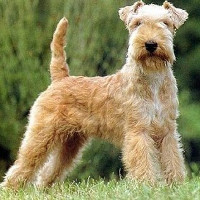
The Lakeland Terrier, a breed also developed in the British Isles in the 1800s, and although there is some controversy among breeders and enthusiasts, it is possible that the Lakeland Terrier is a mix of Bedlington, Welsh Terrier, Border Terrier, Dandie Dinmont and Wire Fox Terrier. This combination of breeding has, over the years, resulted in a dog breed that resembles the Airedale Terrier. This versatile breed was developed to help control the population of foxes, as well as otters, badgers and other vermin, which have proved to plunder the various breeding areas and generally disrupt farms.
Standard of the Lakeland Terrier

Appearance of the Border Collie Lakeland

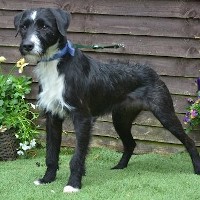
The Lakeland Border Collie is a hybrid mix of Border Collie and Lakeland Terrier and, as such, can have any combination of the characteristics of the breed's two parents. The body can be medium or small, well proportioned and muscular. The eyes may be of any color, oval in shape, small to moderate in size, with an expression of alertness, intelligence, interest or even mischief. Ears may be small or medium-sized, held erect or semi-erect, or folded with the inner edge held close to the head. The muzzle could be long and strong with a well-defined stop and well-developed nostrils open. Jaws are likely to be strong and well developed with even teeth, meeting in a scissor or slightly overlapping scissor bite. The paws may be compact and oval-shaped with deep, solid pads and moderately arched toes with strong nails of moderate length, or the paws may be round, pointed forward with compact, solid toes, with thick, black pads or dark gray with solid dark nails. The tail can be carried low or set high in the back. The coat may be straight or slightly wavy, with a coarse-textured overcoat and a soft, short, dense undercoat, or may have a hard, wiry double overcoat with a short, soft undercoat. The color of your Border Collie Lakeland can be virtually any color or combination of colors and any combination of markings. Colors can include black, brown, blue, red, liver or wheaten.

Temperament of the Border Collie Lakeland

Your Lakeland Border Collie may adopt the temperament characteristics of one or both of the breed's parents, and may be alert, energetic, intelligent, loyal, protective, reactive, aggressive and independent. Your pet is likely to be relatively friendly with strangers, very affectionate with the family and get on very well with children, although they should be supervised with small children as they can be quite energetic when playing. They can tolerate and get on well with other dogs in the household if they have been socialized with other animals early in their lives. However, they may or may not get along with cats. Your Border Collie Lakeland is an intelligent animal, but this doesn't always match its trainability. The Border Collie parent is fairly easy to train, as the breed must always be mentally and physically challenged. The Lakeland Terrier parent, on the other hand, is a little more difficult to train, needing positive reinforcement and rewards to maintain an appropriate attitude towards training. Both parent breeds are quite energetic and require plenty of exercise, recreation and running around.

Needs and activities of the Border Collie Lakeland

The Lakeland Border Collie's parent breeds both have extremely high energy levels and require a wide variety of activities to avoid mental and physical boredom. Neither of this hybrid's parent breeds will fit into apartment life because of their energy levels and the activity levels required to keep them happy and healthy. Border Collie and Lakeland Terrier parent breeds are known to be destructive when left alone for long periods or when they don't get enough varied types of exercise. They will thrive in homes that have large fences in backyards with families who will interact with them regularly and have time to walk them several times a day, let them run free in the backyard or in a pet park and play fetch and Frisbee with them regularly. They can tolerate all climates and can live in both rural and urban communities, provided they can get the mental and physical stimulation and challenges they need.

Maintenance of the Border Collie Lakeland

The Border Collie Lakeland hybrid will require moderate maintenance, with thorough brushing likely to be necessary two to three times a week due to the high levels of shedding brought about by the Border Collie parent breed, while the Lakeland Terrier parent breed brings coat characteristics that require stripping several times a year to control shedding, in addition to brushing once a week. A certain amount of trimming is necessary for the Border Collie coat. Shampooing should only be carried out when necessary. Regular eye examinations, ear examinations and routine cleaning will keep these areas healthy. Almost every canine breed or hybrid needs regular dental examinations and cleaning to prevent periodontal disease and tooth loss. You may need to trim the facial hair if your dog has more Lakeland characteristics, while those with Border Collie coat characteristics will need to be trimmed overall regularly as their hair is longer.

Comments

Latest page updates

  • Telomian

    Telomian He is not recognized by the F.C.I. Origin Malaysia Translation Francis Vandersteen A brief presentation of the Telomian The Telomian is a very rare breed of dog, and the only one native to Malaysia to have been bred outside the country. They were originally bred by the indigenous people of Malaysia to combat parasites such as snakes, rats,...
  • King Wheaten -- Cavalier King Charles Spaniel X Irish Soft Coated Wheaten Terrier

    King Wheaten He is not recognized by the F.C.I. Origin Great Britain <> Ireland -> U.S.A. Translation Francis Vandersteen A brief presentation of the King Wheaten The King Wheaten is a small dog with a heart this big and a playful disposition. Borrowing the energy and soft-coated waves of the Irish Soft Coated Wheaten Terrier and the size and...
  • Spanierd -- English Springer Spaniel X German Shepherd

    Spanierd He is not recognized by the F.C.I. Origin Great Britain <> Germany -> U.S.A. Translation Francis Vandersteen A brief presentation of the Spanierd The Spanierd is a hybrid dog. Its parent breeds are the English Springer Spaniel and the German Shepherd. They have an affable personality. He's known for entertaining family and friends with his...
  • Alaskan Goldenmute -- Alaskan Malamute X Golden Retriever

    Alaskan Goldenmute He is not recognized by the F.C.I. Origin U.S.A. <> Great Britain -> U.S.A. Translation Francis Vandersteen This breed is also known as Alaskan GoldenGoldenmuteAlaskan Gold Retriever     A brief presentation of the Alaskan Goldenmute The Alaskan Goldenmute is a descendant of two great dog breeds: the Alaskan Malamute and the Golden...
  • French pointing dog Pyrenean type

    French pointing dog Pyrenean type FCI standard Nº 134 Origin France Translation Mrs. Peggy Davis Group Group 7 Pointing Dogs Section Section 1.1 Continental Pointing Dogs « Braque » Type Working With working trial Acceptance on a definitive basis by the FCI Tuesday 18 January 1955 Publication of the official valid standard Tuesday 01 August 2023 Last...
  • French pointing dog Gascogne type

    French pointing dog Gascogne type FCI standard Nº 133 Origin France Translation Mrs. Peggy Davis Group Group 7 Pointing Dogs Section Section 1.1 Continental Pointing Dogs « Braque » Type Working With working trial Acceptance on a definitive basis by the FCI Monday 17 January 1955 Publication of the official valid standard Tuesday 01 August 2023 Last...
  • Vucciriscu

    Vucciriscu He is not recognized by the F.C.I. Origin Sicily Translation Francis Vandersteen En français, cette race se dit Vucciriscu Diese Norm ist in deutscher Sprache sichtbar Vucciriscu En español, esta raza se dice Vucciriscu In het Nederlands, wordt dit ras gezegd Vucciriscu This breed is also known as Sicilian Vucciriscu Sicilian Butcher...

© 2026 Groupe Milouchouchou ASBL. Tous droits réservés. En savoir plus

Protected by Copyright01
We use cookies

We use cookies on our website. Some of them are essential for the operation of the site, while others help us to improve this site and the user experience (tracking cookies). You can decide for yourself whether you want to allow cookies or not. Please note that if you reject them, you may not be able to use all the functionalities of the site.

Ok