
 |
Chin-Fenpinscher |
|
He is not recognized by the F.C.I. |
Origin |
China <> Germany -> U.S.A. | |
Translation |
Francis Vandersteen |
A brief presentation of the Chin-Fenpinscher |
| The Chin-Fenpinscher is a hybrid of two companion dogs: the Japanese Spaniel and the Affenpinscher. Both parents are toy-sized and bred for companionship. Little is known about this hybrid mix. Therefore, to understand the character traits inherent in this hybrid, owners need to examine the parent breeds. The Affenpinscher is a Toy Terrier from Germany, while the Japanese Spaniel originates from China. The resulting Chin-Fenpinscher hybrid is just as small and has a low energy consumption, so it's well suited to apartment living. |
History of the Chin-Fenpinscher |
| The Chin-Fenpinscher is a hybrid of the Japanese Spaniel and the Affenpinscher. The mix is a specific modern crossbreed designed as a companion dog and does not have a long, well-known history. As such, owners need to examine the history of the breed's parents to understand the history of this hybrid. Today, the Chin-Fenpinscher is recognized by the Designer Dog Kennel Club and the International Designer Canine Registry. True to both parents, this mix is bred for companionship and is ideally suited to small spaces due to its toy size and low-to-medium energy levels. |
A little of the Japanese Spaniel |
||
| The Japanese Spaniel is an ancient breed that probably originated in the Chinese imperial court. A highly prized dog, the breed takes its name from Japan, where it was presented to the emperor and regarded not as a dog, but as a separate being. The Japanese bred the dog with small Spaniel-like dogs to achieve the breed's modern look. The Japanese Spaniel was not known outside the island nation until the 19th century. Commodore Matthew Perry began trading between Japan and the West and later, the Japanese Spaniel became a status symbol of wealth and nobility in the West and was known as the Japanese Spaniel until 1977. The American Kennel Club first recognized the Japanese Spaniel in 1888. | ||
 |
||
| Standard of the Japanese Spaniel | ||
A little of the Affenpinscher |
||
| The Affenpinscher is a toy Terrier whose name in German means monkey-like Terrier. The name was given for the monkey-like look on the head, with a prominent hairy chin, broad whiskers and a wide, low forehead. The Affenpinscher was bred as a companion as early as the 15th century and continued in popularity until the Second World War, when breeding programs in the USA were discontinued. Interest in breeding resumed in the 1950s and the Affenpinscher, although still considered a rare toy in the USA, slowly gained in popularity. | ||
 |
||
| Standard of the Affenpinscher |
Appearance of the Chin-Fenpinscher |
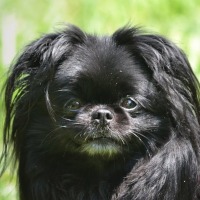
| The Chin-Fenpinscher is a toy-sized dog measuring no more than 25.5 centimeters and weighing no more than 4.5 kilos. The Japanese Spaniel has an abundant single coat or silky texture, while the Affenpinscher has a straight, dense, rough texture. Your Chin-Fenpinscher's coat may resemble either of its parent breeds. The Chin-Fenpinscher's head is well rounded with a short muzzle that can be flattened, and the ears are proportioned and tilt forward. The Chin-Fenpinscher may have an underbite and perhaps even dental problems. A Chin-Fenpinscher's eyes are dark and round, and the nose will match the coat color. |
Temperament of the Chin-Fenpinscher |
| The Chin-Fenpinscher is affectionate with its family, including children, but the size of this hybrid doesn't make it well suited to young children who could hurt the little dog. However, older children with a healthy respect for dogs will find a loving companion who enjoys long hours of time around them. The Chin-Fenpinscher is friendly to strangers, doesn't vocalize much, but will snap if threatened. Early socialization will facilitate life with other pets, but the Chin-Fenpinscher prefers the company of its own people to other cats or dogs. The Chin-Fenpinscher is a low- to medium-energy dog, but does not require intense daily exercise. |
Needs and activities of the Chin-Fenpinscher |
| The Chin-Fenpinscher is a mix of a low-energy breed and a medium-to-high-energy breed. Daily exercise is necessary to avoid boredom and destructive behavior, but the intensity and duration need not be great. As such, the Chin-Fenpinscher is an excellent choice for small spaces, such as in an apartment or city. As far as environments are concerned, the Chin-Fenpinscher prefers temperate zones, but indoor air conditioning will enable it to live in any environment. |
Maintenance of the Chin-Fenpinscher |
| The Chin-Fenpinscher is a hybrid of a hypoallergenic and a non-hypoallergenic breed, so allergies can be reduced in this mix. Shedding levels in this mix are low, but Chin-Fenpinschers require weekly grooming to keep their coats looking their best. Only bathe your Chin-Fenpinscher when necessary, as bathing removes the natural oils and can lead to dermatitis. Trim your Chin-Fenpinscher's nails and clean its ears with a vet-approved solution to remove any wax, dirt or debris as needed. Affenpinschers are prone to dental problems, so pay attention to your Chin-Fenpinscher's dental health and clean his teeth at least three times a week to prevent disease. |



 English (United Kingdom)

Comments