Chow Hound

He is not recognized by the F.C.I.

Origin
China <> Great Britain -> U.S.A.
Translation
Francis Vandersteen

A brief presentation of the Chow Hound

The Chow Hound is a relatively new hybrid dog and, as expected, little breed-specific information is available on the hybrid itself. This hybrid is an intelligent, friendly dog that makes a wonderful pet.

History of the Chow Hound

Little information is available on the Chow Hound hybrid itself, but there is plenty of information on the parent breeds Chow Chow and Basset Hound from which to glean information on your hybrid family member. The name "Chow Hound" derives from both parent breeds, but the origin of the hybrid itself is unknown. The Chow Hound hybrid is recognized by the Designer Breed Registry and the International Designer Canine Registry.
        

A little of the Chow Chow

        
The Chow Chow is an ancient dog from the Far East that has existed for thousands of years. Chow Chows are best known for their unusual blue tongue, fiercely protective nature and courage. As well as being traditionally used as guard dogs, they have been employed as herding animals, hunters and have even been used as a source of food in times of need. Their hostile behavior and stubborn streak make them a challenging pet, which no doubt goes a long way towards explaining why they were raised in a loving, docile Labrador.
Standard of the Chow Chow

A little of the Basset Hound

The Basset Hound is a scent hound originally developed by monks in the 1500s for hunting hares and rabbits. Their oversized ears and large nose ensured a fantastic sense of smell, and their stunted limbs meant they were close to the ground and able to sniff out burrows. Their short legs also meant they were suited to hunters who hunted on foot rather than horseback, making them a favorite of the lower classes. During the 1800s, the breed was refined by mixing it with other dogs, such as the Bloodhound and even the Beagle. As with many other dogs at the time, the number of breeds dwindled considerably during the two world wars, although the Basset Hound survived and is still considered an international pet.
Standard of the Basset Hound

Appearance of the Chow Hound

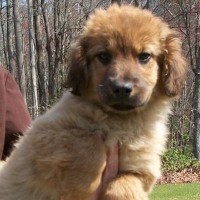
Although the appearance of your Chow Hound hybrid may take on the physical appearance attributes of one or both of the parent breeds, it will probably have a brown or brindle coat that is soft and teddy-bear-like with a body that is likely to be long and stocky like the Basset parent. His ears will be of medium length and drooping and a shorter muzzle than the Basset parents with a shorter dewlap with a speckled tongue and saber-shaped tail. Other colors your dog could inherit are the Basset parent's tricolor (black, white and tan or lemon and white or red and white) or the Chow Chow parent's colors (cream/white, fawn, red, blue or black). Other possible appearance traits: eyes may be almond- or pellet-shaped and dark in color, a scissor bite and feet that are either large and well padded, or small and round with good padding. Coats of both parent breeds are moderate excretors and will probably require moderate levels of grooming maintenance, mainly a contribution from the Chow Chow side of the equation.

Temperament of the Chow Hound

The Chow Hound hybrid has been described as intelligent, friendly and an excellent family dog. If your pet inherits the personality traits of the Basset Hound parent, it could be affectionate, alert, friendly, gentle and kind. If he inherits the personality traits of the Chow Chow parent, he could be aggressive, alert, detached, independent, intelligent, loyal, protective and quiet. Both parent breeds are considered occasional barkers with moderate levels of hunting and wandering tendencies. The Basset parent breed is good with children and cats and for new owners, but the Chow Chow parent is at the opposite end of the spectrum in these areas. Both parent breeds contribute to a difficult biological mix training, requiring a lot of patience and perseverance and perhaps even obedience training to get the job done. In the area of exercise, both parent breeds contribute lower energy levels to the biological mix. Although both parent breeds have a strong tendency to gain weight, the actual exercise requirements are lower than those of other, higher-energy breeds. You should expect your pet to be wary of strangers due to the protective contribution of the Chow Chow parent.

Needs and activities of the Chow Hound

Your Chow Hound hybrid will need 40 to 80 minutes of daily exercise to stay fit, healthy and avoid obesity. He'll be quite happy to lie in front of the fireplace or curl up on that thick, fluffy rug and sleep all day, but these activities aren't healthy for him. Daily walks in the park or around the block will suit him fine, but be aware that a hound's nose can pick up an interesting scent anywhere at any time, stimulating him to follow and investigate without any thought or concern for obeying your "come" command as he runs. To avoid the inevitable chase, keep him on a leash when you take your dog out for exercise. If you have a fenced yard, make sure it's secure, as the Chow Hound can be quite the escape artist. This hybrid is well suited to life in apartments, condominiums or family homes, provided adequate exercise can be provided. It will adapt to both urban and rural areas, and can tolerate both warmer and cooler temperatures, depending on the thickness and density of the coat it inherits.

Maintenance of the Chow Hound

Your Chow Hound hybrid will probably require some grooming, the type and frequency of which will depend on the amount of coat provided by the Chow Chow parent and the season of the year. The Basset parent has a low-maintenance coat, requiring only a weekly brushing and bath as needed, while the Chow Chow parent's longer, denser coat requires more frequent brushing and bathing (several times a week, once a month or more often if necessary) to keep it clean and beautiful, reducing the "doggy" smell that can accompany dog ownership. Neither parent breed is hypoallergenic, and the floppy ears brought by the Basset parent will require frequent checking and cleaning to prevent infection. Both breeds require regular teeth cleaning and oral examinations to prevent periodontal disease, which can lead to tooth loss.

Comments

Latest page updates

  • Telomian

    Telomian He is not recognized by the F.C.I. Origin Malaysia Translation Francis Vandersteen A brief presentation of the Telomian The Telomian is a very rare breed of dog, and the only one native to Malaysia to have been bred outside the country. They were originally bred by the indigenous people of Malaysia to combat parasites such as snakes, rats,...
  • King Wheaten -- Cavalier King Charles Spaniel X Irish Soft Coated Wheaten Terrier

    King Wheaten He is not recognized by the F.C.I. Origin Great Britain <> Ireland -> U.S.A. Translation Francis Vandersteen A brief presentation of the King Wheaten The King Wheaten is a small dog with a heart this big and a playful disposition. Borrowing the energy and soft-coated waves of the Irish Soft Coated Wheaten Terrier and the size and...
  • Spanierd -- English Springer Spaniel X German Shepherd

    Spanierd He is not recognized by the F.C.I. Origin Great Britain <> Germany -> U.S.A. Translation Francis Vandersteen A brief presentation of the Spanierd The Spanierd is a hybrid dog. Its parent breeds are the English Springer Spaniel and the German Shepherd. They have an affable personality. He's known for entertaining family and friends with his...
  • Alaskan Goldenmute -- Alaskan Malamute X Golden Retriever

    Alaskan Goldenmute He is not recognized by the F.C.I. Origin U.S.A. <> Great Britain -> U.S.A. Translation Francis Vandersteen This breed is also known as Alaskan GoldenGoldenmuteAlaskan Gold Retriever     A brief presentation of the Alaskan Goldenmute The Alaskan Goldenmute is a descendant of two great dog breeds: the Alaskan Malamute and the Golden...
  • French pointing dog Pyrenean type

    French pointing dog Pyrenean type FCI standard Nº 134 Origin France Translation Mrs. Peggy Davis Group Group 7 Pointing Dogs Section Section 1.1 Continental Pointing Dogs « Braque » Type Working With working trial Acceptance on a definitive basis by the FCI Tuesday 18 January 1955 Publication of the official valid standard Tuesday 01 August 2023 Last...
  • French pointing dog Gascogne type

    French pointing dog Gascogne type FCI standard Nº 133 Origin France Translation Mrs. Peggy Davis Group Group 7 Pointing Dogs Section Section 1.1 Continental Pointing Dogs « Braque » Type Working With working trial Acceptance on a definitive basis by the FCI Monday 17 January 1955 Publication of the official valid standard Tuesday 01 August 2023 Last...
  • Vucciriscu

    Vucciriscu He is not recognized by the F.C.I. Origin Sicily Translation Francis Vandersteen En français, cette race se dit Vucciriscu Diese Norm ist in deutscher Sprache sichtbar Vucciriscu En español, esta raza se dice Vucciriscu In het Nederlands, wordt dit ras gezegd Vucciriscu This breed is also known as Sicilian Vucciriscu Sicilian Butcher...

© 2026 Groupe Milouchouchou ASBL. Tous droits réservés. En savoir plus

Protected by Copyright01
We use cookies

We use cookies on our website. Some of them are essential for the operation of the site, while others help us to improve this site and the user experience (tracking cookies). You can decide for yourself whether you want to allow cookies or not. Please note that if you reject them, you may not be able to use all the functionalities of the site.

Ok