
 |
Corgi Cattle Dog |
|
He is not recognized by the F.C.I. |
Origin |
Great Britain <> Australia -> U.S.A. | |
Translation |
Francis Vandersteen |
A brief presentation of the Corgi Cattle Dog |
| Playful, energetic and affectionate, the Corgi Cattle Dog is a medium-sized hybrid breed developed from the Welsh Corgi Pembroke and the Australian Cattle Dog. The Corgi Cattle Dog is a mainly quiet dog and will not present itself as a nuisance with a lot of barking. This exuberant breed generally inherits the Welsh Corgi Pembroke's short legs and barrel-shaped body. Although it may tempt more than it can physically handle, this active dog is adept at herding livestock. Its intelligent nature and ability to work alone make it a favorable choice for workers. The Corgi Cattle Dog is considered a breed on the move, and requires extra exercise to maintain its health. |
History of the Corgi Cattle Dog |
| The origins of the Corgi Cattle Dog are not well documented and little is known about them to date. To better understand how the breed came into being, it's essential to review its parent breeds: the Welsh Corgi Pembroke and the Australian Cattle Dog. |
A little of the Welsh Corgi Pembroke |
||
| The Welsh Corgi Pembroke is a tailless breed from Pembrokeshire, Wales. The name Corgi is attributed to the Celtic word for dog. The breed is thought to have been developed around the 10th century. Initially, farmers wanted a dog that would drive cattle and herds successfully and efficiently. The Welsh Corgi Pembroke was adored for its ability to bite the ankles of cattle, encouraging the animal to move. Welsh farmers decided that the breed should be used on all farms in the region and allowed the breed to drive cattle in the fields. There was a time when pastures became competitive and the Welsh Corgi Pembroke was used to define areas. Queen Elizabeth II is known to love the breed and ensures that the palace is always stocked with it. In 1934, the American Kennel Club officially recognized the Welsh Corgi Pembroke. | ||
 |
||
| Standard of the Welsh Corgi Pembroke | ||
A little of the Australian Cattle Dog |
||
| The Australian Cattle Dog was created out of a need for a breed capable of withstanding harsh environmental factors. George Elliott of Queensland is credited with crossing Dingos with the extinct Smithfield dog, then with the blue-merle Highland Collie. At the time, the breed was exceptional for its ability to work in the field. The breed eventually became known as Blue Heelers and Queensland Blue Heelers before the name was changed to Australian Cattle Dog. In 1897, Robert Kaleski began to introduce the breed and developed a breed standard in 1902. In 1903, the breed standard was accepted by the Cattle and Sheep Dog Club of Australia and the Kennel Club of New South Wales. In 1980, the AKC officially recognized the breed. | ||
 |
||
| Standard of the Australian Cattle Dog |
Appearance of the Corgi Cattle Dog |
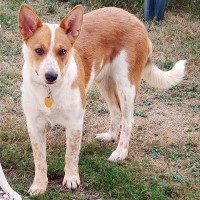
| Corgi Cattle Dogs vary in appearance, and can adopt traits from either of their parent breeds. As this is a hybrid breed, each dog can adopt different coat types and colors. Some may strongly resemble the Welsh Pembroke, while others may resemble the Australian Cattle Dog. Generally, the breed will be medium-sized and have a barrel-shaped body. This short breed will have erect, pointed ears and a short, dense coat. Color combinations can range from beige to white. The tail is usually carried parallel to the chest. Eye colors can range from dark brown to the occasional ice blue. |
Temperament of the Corgi Cattle Dog |
| The Corgi Cattle Dog has a large prey drive and will need early training and guidance to welcome other dogs or pets into its life. This stubborn dog is known to be very independent and will require mental challenges and intense play to keep him engaged. The Corgi Cattle Dog is friendly to his family as well as to children, but may require extra care with those he doesn't know. He can be aloof with strangers and will benefit from socialization with humans and animals to distinguish between friendly strangers and unwelcome intruders. In herding mode, your Corgi Cattle Dog may chew due to its innate instincts. Your best bet is to make sure he has a job to do to stay mentally stimulated. He can benefit from Frisbee, flyball, running, swimming and several walks a day. His high energy level requires intensive daily exercise. Because of its stubborn nature, it's important to be able to provide your dog with positive reinforcement and treats when learning good behavior. |
Needs and activities of the Corgi Cattle Dog |
| Your lively dog will benefit from 60 minutes of daily activity such as Frisbee, flyball, fetch, pulling, swimming and running. Some dogs of this breed may require more. Several walks a day offer hybrid content. The ideal environment for your Corgi Cattle Dog would be a large rural home in a warm climate. Apartment living is not a favorable option due to his high energy levels. A safe area for him to roam and explore will be necessary, as this hybrid is used to working, and needs to work. Obedience classes can be a good challenge for him, as can agility trials. This hybrid does well in all climates, although a temperate climate is preferable. |
Maintenance of the Corgi Cattle Dog |
| The Welsh Corgi Pembroke and the Australian Cattle Dog are known for their moderate coat blowing. The combination of the two parent breeds creates a higher-than-usual level of shedding. Particular attention should be paid to the coat of this breed. Brush with a rubber curry brush or smooth brush for about 15 to 20 minutes a day to remove loose fur and remove any dirt or burrs that may be picked up in the field. The nails of this busy breed need to be checked often to ensure they don't break, and the pads may require intervention if they become dry or cracked. As with all breeds, be sure to groom teeth regularly to avoid dental problems. Bathing shouldn't be necessary so often, unless your hybrid rolls in something unpleasant during a break in its daily chores. |



 English (United Kingdom)

Comments