
 |
Corgi Bichon |
|
He is not recognized by the F.C.I. |
Origin |
Great Britain <> France / Belgium -> U.S.A. | |
Translation |
Francis Vandersteen | |
This breed is also known as |
Corgi Frise |
A brief presentation of the Corgi Bichon |
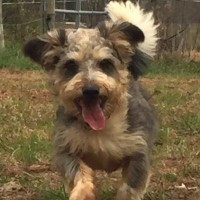
| Charming, playful and independent, the Corgi Bichon was developed from its two parent breeds: the Welsh Corgi Pembroke and the Bichon à poil frisé. Although the history book on the Corgi Bichon has yet to be written, the parent breeds are well documented. This fiercely independent dog is known for loving to roam free and run around with its playful disposition. Your Corgi Bichon may resemble both its parent breeds, depending on the dominant genes. His purpose is to provide companionship to a family and he makes a wonderful addition. This breed contains a high energy level threshold and requires intense play to follow a healthy lifestyle. |
History of the Corgi Bichon |
| The origins of the Bichon Corgi are unknown in terms of where or when it was developed. It is thought that the breed was developed as a result of increased interest in the creative dog over the last 20 years. It's fun to look at the Corgi Bichon's parent breeds to understand potential inherited traits. The Bichon Corgi is not officially recognized by the AKC due to its hybrid status. |
A little of the Welsh Corgi Pembroke |
||
| The Welsh Corgi Pembroke is thought to have been developed from the Spitz family by Flemish weavers looking for a dog capable of efficiently driving cattle. The talent of the Welsh Corgi Pembroke is that they were able to bite the ankles of cattle to attract their attention. In 1926, the breed was introduced to the public when it made its first appearance in the show ring. Whenever you think of the Welsh Corgi Pembroke, it's hard to ignore Queen Elizabeth II's fascination with the breed. She is believed to have skyrocketed their popularity over the years. In 1934, the Welsh Corgi Pembroke was officially added to the roster of the American Kennel Club. | ||
 |
||
| Standard of the Welsh Corgi Pembroke | ||
A little of the Bichon frise |
||
| The origins of the Bichon Frise are not as well known, although it is thought that the Bichon Frise is descended from the Barbet, a medium-sized water dog. It was also thought that French sailors brought the breed back from the Canary Islands in the 14th century. The woolly breed quickly became a symbol of nobility among royalty. However, it eventually fell out of favor until after the First World War, when French breeders worked to preserve the breed. In 1934, the Bichon à poil frisé was admitted to the French Kennel Club. In 1956, the fluffy dog was imported to the USA and became eligible for entry into the AKC's miscellaneous class in 1971. | ||
 |
||
| Standard of the Bichon frise |
Appearance of the Corgi Bichon |
| The Corgi Bichon has no breed standard, and can inherit traits from either of its parent breeds: the Welsh Corgi Pembroke or the Bichon à poil frisé. The Bichon Corgi is a small hybrid breed that is longer than it is tall, taking on the Corgi side of the family. Its body is small and it can also resemble the Welsh Corgi Pembroke in the face. The erect ears are generally inherited from the Welsh Corgi Pembroke. The coat is generally dense, of medium length and can be wavy or curly, more like the Bichon Frise. The coat can also vary in color from tan to white. Its expression and stance are those of a curious dog when standing naturally. |
Temperament of the Corgi Bichon |
| The Corgi Bichon is known for being fiercely independent with a mischievous sequence. Even so, your lively dog will demand your attention at all times. If left alone, he may resort to excessive barking, although this can probably be curbed by early training. Your Corgi Bichon will welcome you into his life and accept your family fairly easily. He may be hesitant with strangers at first, but he'll become friendly with them too. Your curious puppy may need early socialization to get along well with young children as well as other dogs and animals. If properly trained, he can learn to tell the difference between friends and strangers. It's important to provide your active Corgi Bichon with enough activity to tire him out. If he gets bored, he may resort to chewing and tearing your carpet, which can be costly. This active breed requires a family that's not away from home for long periods. Your dog may be stubborn about training, but it's possible with consistency, patience and time. |
Needs and activities of the Corgi Bichon |
| The Corgi Bichon can be a high-energy dog, requiring 45 to 60 minutes of activity a day. Your active dog can benefit from several walks a day, running, swimming, Frisbee and other intense play activities. An ideal environment for your Corgi Bichon would be to live in a large rural or urban home with a yard in a warm climate. Although your dog is small, apartment living would not be ideal due to his high energy levels. If you have a dog park nearby and are committed to taking him there twice a day, an apartment or condo may be suitable. Providing your dog with plenty of exercise will keep him happy and healthy. |
Maintenance of the Corgi Bichon |
| While the Bichon Frise is considered a hypoallergenic breed, the Corgi Bichon is not. Depending on the coat it inherits, the Corgi Bichon may shed very little in spring. If he inherits a coat closer to the curly-haired Bichon type, daily brushing is necessary to prevent matting. A firm bristle brush and a greyhound comb will prevent matting. Untangle knots in your dog's coat before bathing. You should bathe your Corgi Bichon every 6 to 8 weeks, if necessary. Your adorable dog will probably need to be professionally groomed every 4 to 8 weeks if the coat resembles that of the Bichon Frise. Nails should be trimmed every 2 to 3 weeks. Ears may need monthly waxing and weekly cleaning. Teeth should be brushed weekly to prevent tartar build-up. |



 English (United Kingdom)

Comments