
 |
Corgi Basset |
|
He is not recognized by the F.C.I. |
Origin |
Great Britain -> U.S.A. | |
Translation |
Francis Vandersteen |
A brief presentation of the Corgi Basset |
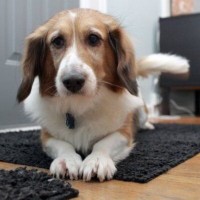
| Versatile, intelligent and alert, the Corgi Basset is a curious hybrid of the Welsh Corgi Pembroke and the Basset Hound. The history of the Corgi Basset is largely unknown, and is thought to be the result of mixtures of designer dogs over the past 20 years. This lively breed can inherit its appearance from either parent breed, and has no defined breed standard. Its coat can be short and dense or medium-length and rough. The breed's purpose is to provide companionship for its family. With its truly friendly nature, it's no wonder that the Corgi Basset has grown in popularity. Maintaining this breed is relatively easy with routine grooming and daily exercise. |
History of the Corgi Basset |
| The origins of the Corgi Basset are unknown. There is a strong likelihood that the hybrid breed was initially developed as a "heck of a" litter. The Corgi Basset is considered a creative breed that has gained in popularity over the last 20 years. Although the origins are unknown, it's equally important to review its parent breeds: the Welsh Corgi Pembroke and the Basset Hound. Because of its hybrid status, the Basset Corgi is not officially recognized by the AKC. |
A little of the Welsh Corgi Pembroke |
||
| The Welsh Corgi Pembroke was originally related to the Welsh Corgi Cardigan before being reclassified in its own category. The Welsh Corgi Pembroke is said to have developed from the Spitz family. Flemish weavers are thought to have been responsible for the breed's initial development, breeding them to herd sheep and cattle. In 1926, the Welsh Corgi Pembroke was brought to public attention by competing in its first show ring. Queen Elizabeth II's fascination with the breed only led to a further increase in popularity over the years. In 1934, the Welsh Corgi Pembroke was officially recognized by the American Kennel Club. | ||
 |
||
| Standard of the Welsh Corgi Pembroke | ||
A little of the Basset Hound |
||
| The Basset Hound is thought to have been developed by the friars of the French abbey of Saint-Hubert to provide a low breed to follow on foot. While the breed is thought to have disappeared during the French Revolution, the Basset Hound exploded back onto the scene after the war. Commoners needed a slow dog for hunting, and the Basset Hound proved to be an excellent choice. Its talented ability to follow scent over long distances also established the breed in the field. The Basset Hound became adept at hunting rabbits and hares. In 1863, the Basset Hound's popularity exploded after the Paris Dog Show. In 1935, the Basset Hound Club of America was formed and the breed was added to the roster of the American Kennel Club. | ||
 |
||
| Standard of the Basset Hound |
Appearance of the Corgi Basset |
| The Corgi Basset is a medium to large hybrid dog developed from the Welsh Corgi Pembroke and the Basset Hound. Its rough, dense coat can vary from short to medium, while its colors range from black and tan, to tan, white, blue and red. The Corgi Basset's appearance has no breed standard and can vary considerably depending on the dog in question. Its face may strongly resemble the Welsh Corgi Pembroke, while its floppy ears resemble the Basset Hound. Its body is longer than it is tall, and its legs are short and stocky. A smart face lets you know this hybrid is focused. |
Temperament of the Corgi Basset |
| The Corgi Basset has an affinity for adventure and would be more than happy to share good times with his family. His inquisitive nature will have him digging holes in your garden if he's not provided with other activities. The Corgi Basset will welcome its family with open paws and will attract extra attention from you. He'll ask for more if he sees you're distracted. Although your Corgi Basset is generally happy, early training should be provided to ensure he can tell the difference between a welcome stranger and a hostile intruder. Although he doesn't possess effective guard dog skills, he can still bark and act like he's the boss. This moderately active dog will play appropriately with your children. Because of its parent breed's tendency to chase rabbits, introducing pets at a young age is ideal. The Corgi Basset has moderate energy levels that make training easy as long as you have the patience. |
Needs and activities of the Corgi Basset |
| Be prepared to aim for 40 minutes or more of exercise a day for this hybrid. Two walks a day will suffice, as will one free stroll in a fenced-in yard. The ideal environment for your Corgi Basset is a large rural house with a yard and a warm climate. Your curious dog would prefer to stay away from a cold climate, as his coat is not designed for long outdoor sessions in cold, windy weather. If your dog doesn't get the recommended amount of daily exercise, he may start to put on weight and eventually engage in property destruction. |
Maintenance of the Corgi Basset |
| The Corgi Basset is not a hypoallergenic breed and sheds moderately. Weekly brushing is recommended to prevent the build-up of dead hair. A rubber curry brush or a sturdy but skin-friendly brush would be optimal choices for brushing the short coat. The Corgi Basset is not known for drooling or having an odor, and bathing should be limited to every 6 to 8 weeks, if necessary. Bathing your dog too often can lead to overproduction of oils on his skin. Particular attention should be paid to his eyes. If you're not sure which shampoo to use, approved hypoallergenic veterinary brands are the safest. Ears should be wiped and cleaned weekly to prevent debris build-up. Nails should be trimmed every 2 to 3 weeks. It's best to get your dog used to the grooming process when he's a puppy, so he understands what to expect. Many dogs learn to love this bonding moment. |



 English (United Kingdom)

Comments