
 |
Cotonese |
|
He is not recognized by the F.C.I. |
Origin |
Madagascar <> Central Mediterranean Basin -> U.S.A. | |
Translation |
Francis Vandersteen |
A brief presentation of the Cotonese |
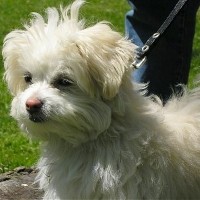
| The Cotonese is a cross between the Coton de Tuléar and the Maltese. Although the names are very complicated, the hybrid dog itself is easy enough to understand. The Cotonese is an energetic, eager-to-please, loving little ball of white fluff that wants nothing more than to be by your side at all times. Now, as a hybrid breed, it's hard to say exactly which personality traits will be the most dominant. However, it's safe to say that the Cotonese is an excellent mix of both an energetic side and a cuddly affectionate side. Its appearance is that of a cotton ball, white and fluffy with a dense, curly coat. The coat can appear as a cream color on most dogs, but generally white is the most common color. Dark black eyes and a small black nose are nestled in the fluffy nest of a face and are full of life with a small sense of sleep and comfort. This hybrid dog will make a wonderful companion for any home with children and other pets, as they get on well with everyone. Just keep in mind that even though they're small, they'll always need to expend their energy in some way, so a nearby garden or park would be nice to have on hand. |
History of the Cotonese |
| Although we don't have much information on the Cotonese's origin story, due to the fact that it's a relatively new hybrid breed, we do know a lot about its parent breeds and where they came from. |
A little of the Coton de Tuléar |
||
| Coton de Tuléar, for example, originates from Tuléar in Madagascar. Like many of its Bichon cousins, the Coton de Tuléar was prized for its portability and shrivelled old man expression. These little dogs were used as companions for decades, and even as paddlers on ships at sea. It wasn't until the 1970s that a Frenchman visiting Madagascar discovered the Coton and brought a few back to France. He then set about establishing the breed, and it wasn't long before white dogs were being brought to North America. He is now a loyal companion who will follow you anywhere, whether that place is right at your feet or at your local Starbucks, it doesn't matter to him. | ||
 |
||
| Standard of the Coton de Tuléar | ||
A little of the Maltese |
||
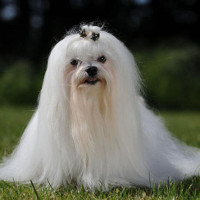
| Maltese, named after their home in Malta, have many different names. Some examples of such names would be the Melitae dog, the ancient Dogge de Malte, the Roman Ladies dog, the Consolateur, the Epagneul doux and the Maltese Lion Dog. Each of these unique names perfectly reflects the personality of these dogs. One of the best-known duties of the Maltese was to console the sick of Egypt and later Europeans. People believed they had healing properties and would even place the little dog on a sick person's pillow. Today, Maltese still make excellent comforters and companion dogs, and are performed in shows all over the world. | ||
 |
||
| Standard of the Maltese |
Appearance of the Cotonese |
| As a hybrid breed, the Cotonese's appearance can vary considerably, even within the same litter. Although the puppies may be very similar in color, as the Cotonese coat is only ever white or cream, the length or coat and the amount of curl may be different. Both parent breeds have very long, beautiful, soft white coats that require a lot of grooming to stay fabulous. Their ears are hidden in the longer fur and their dark eyes and nose are the only thing that really stands out in all the white. The Cotonese is no different, having dark eyes and a small dark nose in a sea of white. However, this breed tends to have more visible ears because the hair isn't as long. The Cotonese's dense coat is ideal for keeping it warm in cold weather, but it can easily overheat, so a mild temperature is preferable. |
Temperament of the Cotonese |
| There's no doubt that with parent breeds like the Coton de Tuléar and the Maltese, the Cotonese is bound to be a total lover. Although it can sometimes be energetic and playful, this breed is really excellent at being a constant silent companion who is perfectly happy to lie at your feet while you work. Even-tempered and ready for anything, the Cotonese is happiest when it gets to be with you, being left alone is very difficult for this breed, so because it's really small and portable, it can be a good idea to take it with you when you can. Fortunately, because of its intelligence and laid-back attitude, the Cotonese is very easy to train, and its desire to please you will make the whole experience really enjoyable. This breed doesn't tend to bark, but you may hear a few little yelps from him when he's excited or notices something new. This is an excellent dog to consider if you're looking for a companion dog. They are excellent with children and other pets, but can be a little wary of strangers. The Cotonese will do very well in any size of home due to the fact that he's happy wherever you are, but it would be a good idea to have a place where he can get some outdoor exercise just to keep him fit. |
Needs and activities of the Cotonese |
| Although the Cotonese is an excellent apartment dog who doesn't mind being indoors, he'll still need to release some of his energy from time to time. A great way to do this is to work out, go for a long walk or play with toys in the yard. Being tired both mentally and physically is a great way to prevent a dog from being destructive through boredom, so always make sure to combine training with recreation to use energy in a positive way. Early socialization is key to being able to take your dog to places like parks to play with other dogs and not be aggressive towards strangers, so make sure you socialize your Cotonese from an early age. Forty-five minutes to an hour a few times a day should be enough physical activity to keep your Cotonese healthy and happy, and walks needn't exceed a few kilometers at a time. Be sure to bring water if it's hot, as this breed can overheat easily due to its dense coat. |
Maintenance of the Cotonese |
| Because both of the Cotonese's parent breeds require a little maintenance to keep their coats in order, you can expect the Cotonese to need a little upkeep. Fortunately, this breed doesn't shed often and is hypoallergenic, so it's perfect for anyone who doesn't want to deal with a lot of loose hair. Brush your dog at least three times a week with a metal comb to remove any knots that may form in the hair and any dirt that may be trapped in the coat. This frequent brushing will keep your Cotonese's coat looking beautiful. As he's a white-haired dog, bathing will need to be frequent if you want to keep that gorgeous white color clean. You may want to take the Cotonese to a professional groomer for this if you have the money, as a good grooming job every few weeks will do wonders to keep their dense, curly coat in tip-top shape. In addition to brushing and bathing, be sure to clean your dog's ears often and always dry them thoroughly, as moisture trapped in the ear can lead to ear infections. Trim your dog's paw nails every few weeks, or whenever you hear them clicking against the floor. This will help ensure that the feet remain healthy and free from tears that could catch and cause injury. |



 English (United Kingdom)

Comments