
 |
Crested Malt |
|
He is not recognized by the F.C.I. |
Origin |
China <> Central Mediterranean Basin -> U.S.A. | |
Translation |
Francis Vandersteen | |
This breed is also known as |
Chinese Maltese |
A brief presentation of the Crested Malt |
| The Crested Malt is a toy hybrid that can inherit any combination of personality and physical traits from its parent breeds: the charming Maltese and the vivacious Chinese Crested Dog. On the whole, however, Crested Malts are pleasant, playful companion dogs with a deep sense of loyalty to their owners. What's more, they tend to inherit the fine frame of the Maltese and the facial features of the Chinese Crested Dog. Their coats are long and silky, requiring regular grooming due to their length. Beyond that, Crested Malts require light daily exercise and regular affection from their family and friends. Because Crested Malts are not yet stabilized as a breed, they cannot currently join the American Kennel Club's list of purebred dogs. |
History of the Crested Malt |
| The Crested Malt's name comes from its two parent breeds: the Chinese Crested Dog and the Maltese, also known as the Maltese. The two Crested Malt parent breeds have different but ancient origins. The Chinese Crested Dog and the Maltese may have been randomly bred together for decades throughout the 20th century. However, the Crested Malt remains an unusual hybrid that is dwarfed by today's most popular Maltese mixes. |
A little of the Chinese Crested |
||
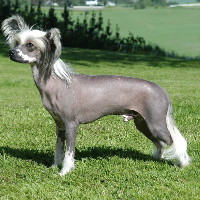
| Many believe that the Chinese Crested Dog originated in modern-day Mexico, where it was kept as a pet by the ancient Aztecs. Others, however, insist that it is descended from African hairless dogs and was brought to Asia on merchant ships in the 13th century. Whatever the case, explorers found these dogs all over Central and South America, as well as in African and Asian ports, as early as the 1500s. In the 1800s, depictions of the Chinese Crested Dog began to emerge in European art and architecture. Finally, the breed developed a following in the United States in the early 20th century. Public figures, including Gypsy Rose Lee, infamous stage personality and superfan of the Chinese Crested Dog, reinforced the breed's reputation by mid-century. The efforts of Gypsy Rose Lee and others finally paid off, and the Chinese Crested Dog was registered with the American Kennel Club in 1991. | ||
 |
||
| Standard of the Chinese Crested | ||
A little of the Maltese |
||
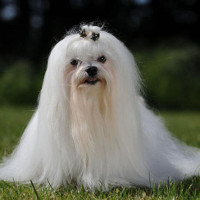
| The Crested Malt's other relative, the Maltese, originated on the island of Malta as early as the 5th century. In fact, these puppies were highly prized by the wealthy royal families of the Mediterranean region for centuries. Eventually, the breed spread further west due to the intermingling of populations during periods of war, particularly the crusades of the 14th century. Subsequently, the Maltese gained in popularity more widely across the European continent. In the 1800s, Americans began importing the breed and it was recognized by the AKC in 1888. Since then, the Maltese has been an appreciated and popular pet in the United States. | ||
 |
||
| Standard of the Maltese |
Appearance of the Crested Malt |
| A Crested Malt generally resembles a longer Maltese with some characteristics of the Chinese Crested Dog, including its slender legs. It's a toy breed whose build lies somewhere between the compact body of the Maltese and the slim silhouette of the Chinese Crested Dog. Crested Malts weigh an average of 2.5 to 4.5 kilos and generally reach a height of 25.5 to 30.5 centimeters. Their medium to long coat is silky and soft. It can be relatively shorter around the torso and legs, and comes in combinations of white, apricot, black, blue, chocolate, cream, palomino, slate with mottled or white markings. Crested Malts have a well-coated, medium-length tail, dark nose and eyes, and a tapering, medium-length muzzle. They have gentle, inquisitive expressions, and small, round feet with black toe pads. |
Temperament of the Crested Malt |
| Crested Malts are sensitive animals known for being playful, cuddly companions. They do very well in family environments where they have daily structure and plenty of human attention. Since this intelligent breed is eager to please, they respond well to human direction, training and obedience. In general, Crested Malts get on well with children and other animals. In fact, this breed enjoys vigorous play sessions with other dogs, as long as they're not much bigger. Although Crested Malts are relatively bulky and may growl when playing, they are not known to be aggressive. In addition, and in keeping with the breed's "toy" reputation, Crested Malts are vocal and can bark frequently. Despite their energy and personality, however, Crested Malts are most content when they lie down and snuggle with family members. This trait makes the Crested Malt ideal for owners living in cities and apartments. |
Needs and activities of the Crested Malt |
| Because of their small size, Crested Malts only need a short walk, a play session in the dog park or to romp around indoors, making them an excellent pet for apartment or urban dog owners. Beyond that, Crested Malts are well suited to all types of climate. However, owners should ensure that their pet is not exposed to significant amounts of sun or cold if it has hairless areas on its body. Also note that this breed tends to chase small animals and should always be supervised in off-leash areas. Crested Malts are also highly intelligent and enjoy playing games and learning commands as part of their daily entertainment. |
Maintenance of the Crested Malt |
| Crested Malts are hypoallergenic and well suited to allergic dog lovers. Although they are minimal excretors, they need their long coats brushed regularly. As Crested Malts have longer hair in certain areas, owners should trim their dogs' ears, face and feet to avoid infection or impede mobility. Crested Malts should also be bathed once a month and, like all dog breeds, have their teeth brushed daily and their nails trimmed once or twice a month. Although not common in this hybrid, some Crested Malts may have hairless areas if they take after their Chinese-created parent. If this is the case, owners should take every precaution to protect their dog's hairless areas with clothing or skin treatments to avoid topical irritation or infection. |



 English (United Kingdom)

Comments