
 |
Dalmadoodle |
|
He is not recognized by the F.C.I. |
Origin |
Croatia <> France -> U.S.A. | |
This breed is also known as |
Dalmapoo
|
A brief presentation of the Dalmadoodle |
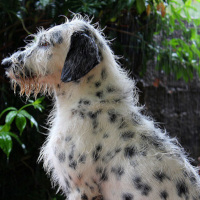
| The Dalmadoodle is a medium to large-sized dog that tends to love everyone and, in turn, thinks he'll be loved in return. It's an intelligent dog that's a Poodle trait, but can also inherit a slight stubborn streak from its Dalmatian parent, which means you'll need patience during training to overcome it. The Dalmadoodle loves to learn new tricks, so not only does it provide mental stimulation, it's fun too. A daily walk or moderate physical activity will keep this dog easy-going and calm. Socialize your dog by allowing him to meet other owners and their dogs at the dog park, where the enclosed space is ideal for letting them off-leash and playing doggy games. These dogs are ideal family dogs, as they are affectionate, loyal and very devoted to their family. The Dalmadoodle is not recognized by the American Kennel Club (AKC), but is recognized by the American Canine Hybrid Club and the Dog Registry of American Inc. |
History of the Dalmadoodle |
| It's useful to look at the parent breeds from which the Dalmadoodle comes to understand the background of this popular hybrid dog. |
A little of the Dalmatian |
||
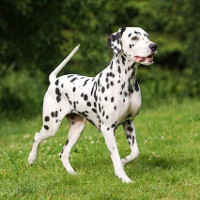
| Although the origin of Dalmatian breeds is unknown, spotted dogs have been found in Egyptian bas-reliefs and Hellenic friezes, so this is an ancient breed. In 1993, efforts to have the breed recognized as having Croatian roots were finally accepted. In the Middle Ages, Dalmatians were used as hunting dogs. They then became popular as carriage dogs in the 1800s, trotting alongside and among horses and carriages and guarding them while the master was busy elsewhere. They have also been firefighters' mascots, war sentries, draft dogs, circus performers, vermin hunters, bird dogs, track dogs and finally guard dogs. | ||
 |
||
| Standard of the Dalmatian | ||
A little of the Poodle |
||
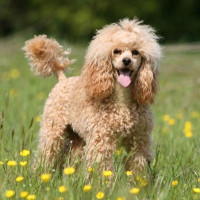
| Poodles began life as hunting dogs. The breed originated in Germany, but the French refined it and made it their own. Dating from the 1800s or earlier, they were particularly good at retrieving from water. Quick and intelligent with a desire to please, they later became popular as performing dogs with traveling troupes and circuses. Poodles come in three sizes and are one of the world's most popular breeds. They appear glamorous in the ring, but have worked diligently for the blind and as police dogs. They compete in all dog sports, including sheep herding, obedience and agility. They were recognized by the American Kennel Club in 1886. | ||
 |
||
| Standard of the Poodle |
Appearance of the Dalmadoodle |
| The Dalmadoodle generally inherits the soft, fluffy coat of its Poodle parentage and the attractive coloring of the Dalmatian, giving it a unique and appealing appearance. They have large, athletic bodies and long tails, and are beautifully proportioned. The Dalmadoodle carries itself proudly, head held high and looking alert. With a rounded head on top and expressive, wide dark eyes topped with downy eyebrows, they can look dignified but aren't beyond being a little comical. The nose is black with wide-spaced nostrils, the muzzle is long and the teeth come together in a scissor-like bite. Leaning all over with strong, shapely legs, the Dalmadoodle combines good looks with a gentle, playful nature. |
Temperament of the Dalmadoodle |
| Dalmadoodles are medium to large dogs with a gentle, calm nature. Their playful nature makes them ideal with children. They won't tire of the endless games children can invent, and will join in whether they're invited or not. The Dalmadoodle is intelligent and benefits from training, although you may need to be patient as some have a stubborn streak. The training program should be fun, mentally stimulating and short at first. Be patient and gentle, they can be sensitive to harsh words or tone. Dalmadoodles generally like to learn new tricks, especially if you give them lots of praise. These dogs are happy and enthusiastic, loving and affectionate and love lots of attention. Their mission in life is to please you, so they'll be like Velcro and stick by your side. Although they are protective and will warn you with a "woof" or two when strangers are nearby, they are not aggressive dogs. New people at home may find the Dalmadoodle a little reserved at first, but once the dog gets to know them, they'll be easy-going and playful. |
Needs and activities of the Dalmadoodle |
| The Dalmadoodle is an active dog and needs a good walk every day and preferably some free time in the backyard to explore, play with the kids or just relax as dogs do. They'll love joining you for a jog or a hike, and enjoy a trip to the dog park where they can socialize and meet other dogs and owners in a safe, fenced-in area. These dogs need mental stimulation with games or toys to burn off that inquisitive energy. The Dalmadoodle can settle down in a town or country, as long as the family is happy, so are they. In hot weather, they may need to swim or play with the hose to cool off. Always make sure your dog has a sheltered place to get away from the heat if left alone for any length of time. Overheating can happen quickly and be fatal. |
Maintenance of the Dalmadoodle |
| Although the Dalmadoodle may have a coat similar to that of the Poodle, as it possesses the Dalmatian genes as well as the coat, it is unlikely to be hypoallergenic. One thing's for sure, you'll need to brush the dog's coat often to keep it healthy, clean and tangle-free. If the coat has a texture more similar to that of a Poodle, you may need grooming appointments to strip and trim the coat. Grooming is a good time to check your dog for cuts or infections, clean inside the ears and give his teeth a good brushing. If you train your Dalmadoodle to get used to regular grooming, it will make things easier when your baby grows up. A dog used to being handled has the advantage of an easy, stress-free visit to the vet. Most dogs will appreciate the routine and see it as extra time and attention on your part. Don't forget to trim their nails at the same time. |



 English (United Kingdom)

Comments