 |
Dobie-Basset |
|
He is not recognized by the F.C.I. |
Origin |
Germany <> Great Britain -> U.S.A. | |
Translation |
Francis Vandersteen |
A brief presentation of the Dobie-Basset |
| Dobie-Bassets are intelligent, loyal dogs that can be used for guarding, racing, military work, breeding and observation. They generally live between 10 and 13 years. Not much is known about the history of these dogs as they are a hybrid breed that was created recently, although this mix creates a large, intelligent dog that is loyal and good with older children. Due to the unique appearance of the parents, this breed can be variable in appearance. They are gentle pets that will suit people who have no previous experience with dogs. This breed is also easy to care for and requires no special maintenance. |
History of the Dobie-Basset |
| The history of this creative dog is unknown, as they were only recently created. However, since the hybrid was bred from the Dobermann and Basset Hound, their history technically begins with them. |
A little of the Dobermann |
||
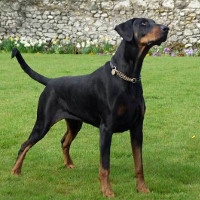
| The Dobermann dog was first found in Germany in the 1800s. The breed was actually developed by a tax collector by the name of Karl Friedrich Louis Dobermann. This, of course, is where the breed got its name. Karl's aim was to create a dog that could protect him while he visited dangerous neighborhoods, as well as intimidate people who wanted to evade tax payments. He had access to the local animal shelter and could therefore have used a variety of dogs to create this breed. As he didn't keep proper documentation of the breeds he used, it's unclear exactly how this dog came to be. Some breeds that would have been used were Shorthaired Sheepdogs, Black and Tan Terriers, German Pinschers and Rottweilers. There's also the possibility of the Beauceron, Braque de Weimar, Greyhound and Black and Tan Manchester Terrier. The breed quickly gained in popularity and was found in Europe, Russia, the USA and South Africa in the 1920s. Today, the breed is known the world over. | ||
 |
||
| Standard of the Dobermann | ||
A little of the Basset Hound |
||
| Basset Hounds were first discovered in the early 1500s. It was the friars of the Abbey of Saint-Hubert who found these dogs in northern France. Their aim was to create a low, slow breed that was highly intelligent but could be used for hunting on foot rather than on horseback. Deer, pheasants, foxes, rabbits, squirrels, raccoons and badgers were all prey for this hunting dog. Wild boar and wolves were also thought to be hunted by these dogs. Bloodhounds are definitely part of this breed's ancestry and gave them their keen sense of smell. These dogs would hunt well in packs or individually, and became popular among the French from the 16th to the 19th century. A pair of a Basset Hound type was imported to England in 1866 and had a litter of puppies a year later. However, the breed only gained popularity in 1874, when a dog of this breed named Model was imported and used in a selective breeding program. The breed's popularity increased when it was introduced into Queen Alexandra's royal kennels. | ||
 |
||
| Standard of the Basset Hound |
Appearance of the Dobie-Basset |
| The most accurate way to determine the appearance of a hybrid dog is to consider the appearance of its parents. The Dobermann is a compact dog with an athletic build. Their heads are long and narrow, and the oval-shaped eyes will be dark. Dobermanns usually have cropped ears and docked tails, but it's up to the owner and the law of the land. This graceful dog must be proportionate and squarely built. Basset Hounds have distinctive features that set them apart from other breeds. For example, droopy eyes, short bodies and long ears give them the appearance of a sad old man. But make no mistake, these dogs are in fact very active. They have long, big-boned bodies and short legs. Their skulls are round and fairly large, and their muzzles are broad. The ears, well known for this breed, are quite long and can reach the dog's nose when extended forward. Their long tails are carried high, the skin is loose and hangs in folds, and the paws are large. Your Dobie-Basset will probably be long but muscular, with other traits determined by the dominant parent. |
Temperament of the Dobie-Basset |
| The Dobie-Basset is intelligent and loyal, and should be easy to teach, although it can be strong-willed. Start training at an early age to raise the best dog you can. Although this breed is quite sociable and should behave well with strangers, they are known to be skilled watchdogs as they are very alert and will inform you of anything strange going on in the house. These dogs will do well with older children, but need to be supervised when interacting with younger children. It's important with this breed, as with all dogs, to train and socialize them well. You should undergo full obedience training and socialization with other animals and people. As the Dobie-Basset is a combination of the Basset Hound and the Dobermann, they may have different personalities. To determine a more in-depth temperament for this breed, consider that of its parents. Both the Dobermann and Basset Hound are well-behaved dogs that can do well with inexperienced owners. |
Needs and activities of the Dobie-Basset |
| Dobermanns need plenty of exercise to remain obedient and non-destructive, and can get bored easily. So exercise your Dobie-Basset well, and be sure to change activities to keep it interesting. To help prevent Basset Hounds from becoming overweight, make sure they get enough exercise. This intelligent breed will need to be exercised both mentally and physically. These dogs will need a moderate amount of exercise to stay in shape. Between 30 and 60 minutes a day should suffice. |
Maintenance of the Dobie-Basset |
| This breed will need a moderate amount of grooming. To keep their coats in perfect condition, brush them briskly every day. Overall, the maintenance needs of this breed are not too demanding, as both parent breeds are easy to care for. Dogs of all breeds should have their teeth brushed every day. If you can't do it every day, brush your dog's teeth at least two or three times a week. This will keep teeth and gums healthy. Your pet should also have his ears wiped every week, as those with long, floppy ears are more prone to infection. Finally, your Dobie-Basset will need his nails trimmed. The frequency with which this should be done can vary according to each dog's activity, as certain lifestyles will naturally wear down the nails. However, the owner should check nail length once or twice a month. A dog that makes clicking noises on the ground when walking is definitely overdue for a trim. |



 English (United Kingdom)

Comments