
 |
English Coonoodle |
|
He is not recognized by the F.C.I. |
Origin |
U.S.A. <> France -> U.S.A. | |
Translation |
Francis Vandersteen | |
This breed is also known as |
English Coonpoo
|
A brief presentation of the English Coonoodle |
| An English Coonoodle is a cross between an American English Coonhound and a Poodle. They are gentle and cuddly with their owners, but often protective and wary of strange people or animals. They are an active breed with a strong urge to hunt, and may be best with older children. They have an average lifespan of 10 to 13 years, weigh 18 to 29.5 kilos and reach a height of 48 to 58.5 centimeters. English Coonoodles generally resemble Poodles, but without the shaggy coat and can have the facial appearance of a hound. Owners say this hybrid needs lots of outdoor space because it loves to run. |
History of the English Coonoodle |
| The name English Coonoodle is a nod to the breed color it inherits from the American English Coonhound and the name of its other parent breed, the Poodle. The hybrid of these two pure breeds, the English Coonhound, is thought to have originated in the southern United States sometime after 1950. Although it has been around for decades, it has not become a popular hybrid. Currently, the English Coonoodle is not recognized by the American Kennel Club. |
A little of the American English Coonhound |
||
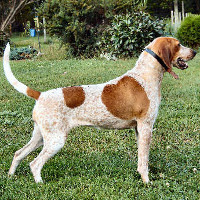
| The American English Coonhound is descended from European hunting dogs, which were bred extensively throughout Europe for hunting, particularly in France and England in the 17th and 18th centuries. When the North American colonies were established, British colonists imported the first versions of the American English Coonhound to the New World, then known as English Foxhounds. By the 1700s, these dogs were classified as their own distinct breed and known as Virginia Hounds. In fact, George Washington is said to have been an avid dog breeder. Eventually, Virginia and Maryland dogs began to diversify into three different breeds, and the dogs that migrated to other parts of the country became generally known as Coonhounds for their ability to hunt raccoons as well as foxes. After the Second World War, fans of the now English Coonhound began to favor red-furred dogs. In 2010, American English Coonhounds were recognized by the AKC with the prefix "American" to indicate that the breed was developed in the USA. | ||
 |
||
| Presentation of the American English Coonhound | ||
A little of the Poodle |
||
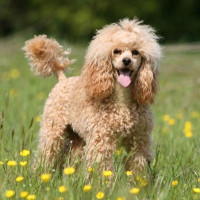
| The English Coonhound's other parent breed, the Poodle, was first developed in Germany and also migrated to France where it was further refined; in fact, many believe the Poodle originated in France due to its popularity there. Once hunters, the Poodle's hair trim was actually used to keep muscles and joints warm and supple while they retrieved waterfowl from cold bodies of water. | ||
 |
||
| Standard of the Poodle |
Appearance of the English Coonoodle |
| English Coonoodles generally resemble a Poodle without a shaggy coat and with certain characteristics similar to those of a hunting dog. English Coonoodles are medium-sized dogs, averaging between 18 and 29.5 kilos in weight and 48 to 58.5 centimeters in height. They have a relatively square, gangly but athletic build. They are combinations of red, white, blue, brown, black and tan, spotted in some areas and ticked in others. However, depending on the color of the Poodle parent, the coat may also be influenced by silver, gray, cream and apricot. English Coonoodles have gentle, intelligent expressions, with low-set floppy ears, a long muzzle that ends in a black nose and round, usually brown eyes. They also have a tapered, medium-length tail and rounded paws with heavy pads for escapades in wet, wooded areas. |
Temperament of the English Coonoodle |
| The devoted English Coonoodle can be both discreet and energetic, depending on the situation. These dogs are people-oriented and like to relax and snuggle with their owners. Despite their size, they are known to curl up with their humans like little lapdogs. They are also intelligent and respond well to obedience training, especially if trained early and systematically. At the same time, they are athletic dogs that require a great deal of exercise and mental stimulation. English Coonoodles that resemble their Poodle ancestors can be nervous and quite vocal, having inherited the barking and howling of both parent breeds. Given their hunting heritage, English Coonoodles tend to roam and hunt, so they need to be supervised when off-leash. In addition, they can be hesitant with strangers or aggressive towards small pets and children, so it's best to supervise your English Coonoodle when introducing it to new people and animals. |
Needs and activities of the English Coonoodle |
| Because English Coonoodles come from two high-energy breeds, they require a fair amount of exercise and activity. English Coonoodles should have at least one moderate to long walk a day, combined with recreation with their owner or a walk in the dog park. English Coonoodles may even bathe on occasion. This breed has a very strong hunting instinct, so keep in mind that even a slight trigger will go off. As such, it's best to supervise English Coonoodles in off-leash situations. Having access to an English Coonoodle sporting outlet will help satisfy this impulse, as well as provide an excellent exercise routine. Despite their energy, these dogs are not afraid of small living spaces and can adapt to apartment life if necessary, especially if they get a good dose of daily exercise. |
Maintenance of the English Coonoodle |
| English Coonoodles are moderate excretors and therefore require a moderate level of grooming. They are not completely hypoallergenic, but produce fewer allergens due to the hair-like coat they inherit from their Poodle parent. Owners can reduce shedding and matting by brushing occasionally and giving their English Coonoodle monthly baths. English Coonoodles that resemble their Poodle parent may benefit from more frequent and professional grooming to tame their mane. When bathing an English Coonoodle, owners should pay particular attention to cleaning their dog's floppy ears to avoid wax infection or debris build-up. Like all dog breeds, English Coonoodles should have their teeth brushed daily and their nails trimmed once or twice a month. |



 English (United Kingdom)

Comments