 |
Standard Irish Wolf Schnauzer |
|
He is not recognized by the F.C.I. |
Origin |
Germany <> Ireland -> U.S.A. | |
Translation |
Francis Vandersteen |
A brief presentation of the Standard Irish Wolf Schnauzer |
| The Standard Irish Wolf Schnauzer is a specific cross between a Schnauzer and an Irish Wolfhound. They are intelligent, affectionate dogs that make excellent pets. They get on very well with children and other pets, and will enjoy being part of a multi-dog household. These dogs don't do well to be left for long periods and need a family where someone is at home most of the day. They also need to be included in family activities. The exuberance of the Schnauzer combined with the more relaxed nature of the Irish Wolfhound usually results in an energetic dog, but one that doesn't need very intense exercise. Common colors can include black, salt and pepper, gray, red, white and fawn. Their coat is likely to be rough and stiff. |
History of the Standard Irish Wolf Schnauzer |
| The Standard Irish Wolf Schnauzer is a hybrid breed and is a specific cross between a purebred Schnauzer and a purebred Irish Wolfhound. |
A little of the Schnauzer |
||
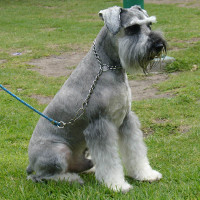
| The Schnauzer is the oldest and original prototype of the three Schnauzer breeds, which also include the Miniature Schnauzer and the Giant Schnauzer. They can be recognized by their arched eyebrows, bushy whiskers and goatees. They were bred as ratter dogs around the 15th century in Germany, and their name comes from the German word "schnauze", meaning snout. Schnauzer-like dogs are thought to have existed as early as the 14th century. The ancestors of these dogs are thought to have been a cross between the black German Poodle and the gray Wolfspitz with wire-haired Pinschers. A standard for the Schnauzer first appeared in 1880. These dogs have a long history as working dogs and were used by the German army and police. They first arrived in the USA in the early 1900s and the Schnauzer Club of America was formed in 1925. | ||
 |
||
| Standard of the Schnauzer | ||
A little of the Irish Wolfhound |
||
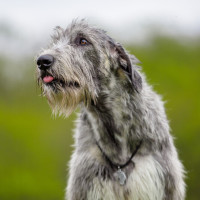
| The Irish Wolfhound was developed as a war dog, although today it is a gentle giant that loves children and is not at all aggressive. They are the largest of all dog breeds and are also known for their shaggy eyebrows and gentle expression. The name comes from the time when they hunted wolves, and they were highly prized in combat, where they used to pull men from horses or chariots. The Irish used them to guard their homes and protect their livestock. At the time of the English conquest of Ireland, only the nobility were allowed to own Irish Wolfhound. They were often given as gifts, and many were exported to European royal houses. Breeders including Major H. D. Richardson and Captain George Augustus Graham are credited with ensuring that numbers increased. Ancestors of the modern Irish Wolfhound include Glengarry Deerhounds, Borzoi and Tibetan Mastiffs. The first Irish Wolfhound was registered with the American Kennel Club in 1897. | ||
 |
||
| Standard of the Irish Wolfhound |
Appearance of the Standard Irish Wolf Schnauzer |
| The Standard Irish Wolf Schnauzer is a large designer dog and is a cross between a purebred Irish Wolfhound and a purebred Standard Schnauzer. Common colors can include black, salt and pepper, gray, red, white and fawn. Their coat is likely to be rough and stiff. The Standard Irish Wolf Schnauzer typically weighs between 22.5 and 52 kilos and reaches a height of up to 71 centimeters. Your pet is likely to have shaggy eyebrows over dark brown eyes with an alert but gentle expression. He's also likely to have the distinctive Schnauzer beard. Although a strong, muscular dog, it is also likely to be quite graceful. |
Temperament of the Standard Irish Wolf Schnauzer |
| A Standard Irish Wolf Schnauzer is an affectionate, intelligent dog that does best when it spends a lot of time with its family. These dogs are sensitive and don't do well left in a yard, so they're best suited to people who will devote time to their dog. The Standard Irish Wolf Schnauzer is gentle and gets on very well with children and other dogs, but early socialization and training is always a good idea. These dogs are loyal and protective of their families. They can be a little wary of strangers and will always bark to alert you if a stranger approaches. They are fairly easy to train and will be very sensitive to lots of praise and positive reinforcement. But they can have a stubborn Schnauzer side, so patience may be required. They are recommended for those who have some experience with dogs. They are energetic dogs but don't need a very intense exercise regime, although they do need a good amount of daily activity. |
Needs and activities of the Standard Irish Wolf Schnauzer |
| The Standard Irish Wolf Schnauzer will need plenty of exercise to stay fit and healthy. He'll love joining you for long walks to the beach or dog park, but make sure he's on a leash on your way so he doesn't run off after small dogs. The Standard Irish Wolf Schnauzer will love to play ball games and will do best in a home that has a fenced garden in which he can play and explore. Make sure you don't exercise your dog after a big meal, as they suffer from bloat. They can be very sensitive to heat, so also try not to exercise your pet in the heat of the day, especially in summer. |
Maintenance of the Standard Irish Wolf Schnauzer |
| Standard Irish Wolf Schnauzers are fairly low-maintenance when it comes to grooming. They can also be hypoallergenic on the Schnauzer side, which means they'll be good dogs for allergy sufferers. They are likely to shed only moderately, and weekly brushing should be more than sufficient to keep them in good condition and to remove loose hair. Your dog may need trimming around the eyebrows, beard and body. These dogs don't have a strong dog smell, so frequent bathing is not recommended as it can dry out the skin. The face may need to be cleaned after meals to prevent food sticking to the fur. Brush his teeth several times a week to keep them healthy. You can trim your dog's nails every few weeks if they don't wear down with daily exercise. |



 English (United Kingdom)

Comments