
 |
Miniature French Bull Terrier |
|
He is not recognized by the F.C.I. |
Origin |
France <> Great Britain -> U.S.A. | |
Translation |
Francis Vandersteen |
A brief presentation of the Miniature French Bull Terrier |
| The Miniature French Bull Terrier is a specific cross between the French Bulldog, a popular companion dog for English craftsmen and lacemakers, then transplanted to northern France, and a tenacious little dog with an unusually arched head, the Miniature Bull Terrier. This hybrid makes an excellent companion for older children as they are generally very playful and tolerant of rough handling, but they can be too enthusiastic for the very young and can become aggressive with other dogs or possessive of their food. These dogs have fairly undemanding exercise and grooming routines and make good companions in a large house or apartment. |
History of the Miniature French Bull Terrier |
| The Miniature French Bull Terrier is an intentionally crossbred dog, a combination of the French Bulldog, a small pet and watchdog that was favored by English lace makers in the mid-1800s, and the Miniature Bull Terrier, a compact version of the Bull Terrier, first bred as a fighting dog, then as a “Gentleman's Companion”. |
A little of the French Bulldog |
||
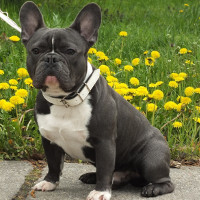
| The French Bulldog is thought to be a descendant of the English Bulldog of the 1800s, designed to be a smaller, lighter variety of Bulldog for use as a pet and watchdog. These dogs became particularly popular with the craftsmen and lacemakers who later moved to northern France during the Industrial Revolution. Once in France, their popularity exploded and enthusiasts began to develop a more uniform breed, like today's French Bulldog, characterized by straight legs and a compact body, with a slightly lower jaw, but at the time, pink or bat ears were acceptable. A new breed standard was drawn up by the French Bulldog Club of America in the late 1800s, specifying the bat-eared trait. The breed remained rather rare until the 1980s, when it began to enjoy renewed popularity due to its suitability for urban living. | ||
 |
||
| Standard of the French Bulldog | ||
A little of the Miniature Bull Terrier |
||
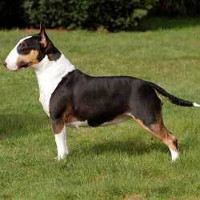
| The Bull Terrier's original ancestors are very similar to the ancestors of the Pit or Staffordshire Bull Terrier, and the Bull Terrier of the 1800s not only had a similar body structure, but also had a head shape somewhat similar to these related dogs, rather than the distinct arched skull shape that we see in modern Bull Terriers and miniature Bull Terriers. At the time, they could rather be distinguished from these other breeds by their characteristic white coloration, but genetically-related color problems, such as deafness, encouraged breeders to also start adding dogs with different colorations. Although the Bull Terrier was recognized by the AKC in 1885, it wasn't until the early 1900s that the first dog with the characteristic egg-shaped head was born. In 1991, the American Kennel Club recognized the Miniature Bull Terrier, a variety of Bull Terrier that averages about half the size of the modern standard Bull Terrier. | ||
 |
||
| Standard of the Miniature Bull Terrier |
Appearance of the Miniature French Bull Terrier |
| The Miniature French Bull Terrier is a fairly small dog, generally around 30.5 centimeters in height and weighing less than 14 kilos. There are sturdy, compact dogs that are more powerful than their size suggests, with straight legs, powerful jaws and great tenacity. They have broad heads, and although they may inherit the egg-shaped skull of the Miniature Bull Terrier or the shortened muzzle of the French Bulldog, they usually fall somewhere in between, with a moderate-length muzzle and moderate stop. The eyes are dark and usually set low on the face, and can be round or triangular in shape, and this hybrid will inherit the erect ears of both parent breeds, although the French Bulldog's ears are much larger than those of the Miniature Bull Terrier. Both parent breeds have similar single-ply coats, and you can expect the offspring to also have short, glossy coats with a coarse texture. |
Temperament of the Miniature French Bull Terrier |
| This crossbreed is generally a comical but gentle animal with people of all ages, but if they take after the Miniature Bull Terrier, they can become overexcited and cause bumps, bruises or even fall over in their enthusiasm to greet everything. Because of this trait and a possible possessiveness when it comes to their food, this breed may not be the most suitable dog for homes with young children, although they generally get on quite well with slightly older children. In many cases, these dogs will be quite agreeable with other dogs, but some individuals may show unwarranted aggression towards other dogs, particularly those of the same sex, however, effective socialization can help ward off both shyness and aggression. This hybrid can be more difficult to train than other dogs due to the French Bulldog's stubbornness and a tendency to challenge your leadership found in the Miniature Bull Terrier. |
Needs and activities of the Miniature French Bull Terrier |
| The Miniature Bull Terrier is an energetic animal, generally requiring more exercise than other dogs of their size, however, although very young French Bulldogs can be frisky and lively, they tend to settle down and become rather calm as they mature. Around 45 minutes to an hour of vigorous activity a day is usually enough to keep them in good health, although this is more effective if broken down into several shorter exercise sessions throughout the day. This crossbreed may be more sensitive to UV damage, especially individuals with white or light coats, and canine sunscreen should be used to protect your dog from sunburn and to reduce the risk of developing skin cancers. |
Maintenance of the Miniature French Bull Terrier |
| Grooming the Miniature French Bull Terrier should be a fairly straightforward affair, largely due to its short, easy-care coat. They don't need baths, usually every few months, and weekly brushing with a grooming glove, smooth brush or bristle brush is usually effective in removing dead hairs and restoring shine to the coat, although they can shed a lot during spring or autumn and require more frequent brushing. Dental hygiene is also particularly important for this hybrid, especially if it inherits the French Bulldog's lower jaw, and toenails are likely to require regular trimming. The ears of these dogs can also be prone to developing allergic reactions and infections, so it's essential to examine them regularly and make sure they're clean and dry. |



 English (United Kingdom)

Comments