 |
Miniature Schnoxie |
|
He is not recognized by the F.C.I. |
Origin |
Germany -> U.S.A. | |
Translation |
Francis Vandersteen |
A brief presentation of the Miniature Schnoxie |
| The Miniature Schnoxie is a specific cross between the Miniature Schnauzer and the Dachshund. These charismatic, affectionate breeds are considered small dogs that appear to be quite heavily built. The Schnoxie can develop either a smooth, straight coat or a dense, stiff one. Some can be hypoallergenic and are often weak excretors. Miniature Schnoxies are affectionate dogs that bond very closely to their owners. These guys can do well in any home as they are easy to train, but bear in mind that some Miniature Schnoxies can be quite noisy. Those who like to bark may not be suited to an apartment lifestyle. |
History of the Miniature Schnoxie |
| The Miniature Schnoxie is a specific cross-breed that may have emerged in the last decade. As the hybrid is still considered a new breed, little information is available about its purpose and creation. However, the Miniature Schnoxie is currently recognized by the American Canine Hybrid Club, Designer Breed Registry, Designer Dogs Kennel Club, Dog Registry of America and the International Designer Canine Registry. The Schnoxie is a hybrid of the Dachshund and the Miniature Schnauzer. |
A little of the Miniature Schnauzer |
||
| The Miniature Schnauzer is a brave little dog whose original purpose was to hunt vermin and guard the farm. Thought to have developed in mid-19th century Germany by crossing the standard Schnauzer with smaller breeds such as the Affenpinscher, Pomeranian and possibly the Poodle, early breed records note the birth of a Miniature Schnauzer which was a black female called Findel, who was born in October 1888. The first Mini Schnauzer club was formed in Cologne, Germany. While the years of the First World War were difficult for many dog breeds, the Miniature Schnauzer managed to hang on, then exploded in the years that followed. While the coat color has changed from red, black and tan and yellow to the distinguished shades of silver and black we see today, one thing hasn't changed, and that's their popularity, which remains as strong as ever. | ||
 |
||
| Standard of the Miniature Schnauzer | ||
A little of the Dachshund |
||
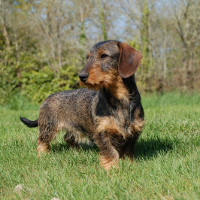
| The Dachshund is a courageous little dog often referred to as the Weiner. These pure breeds were developed in Germany in the 1500s and were mainly used to chase badgers from dens and hunt small game. It is widely believed that the first smooth-coated Dachshund was created by crossing the Braque, a pointing and hunting dog, the Pinscher and the French Basset Hound, while wirehaired dogs may have been created by crossing smooth-coated Dachshunds with various Spaniel and Terrier breeds. Today, parent breeds and hybrids live more comfortable lives, serving as loyal, loving companions to their owners. | ||
 |
||
| Standard of the Dachshund |
Appearance of the Miniature Schnoxie |
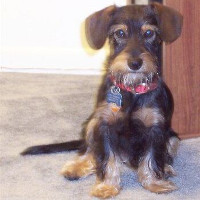
| The Miniature Schnoxie is a small to medium-sized dog, often measuring 25.5 to 35.5 centimeters in height and tipping the scales at 13.5 kilos. For small dogs, the Schnoxie is a breed that can appear to have a very strong, muscular physique. These hybrids will have long muzzles with powerful jaws and ears that tend to sit high on the head, which can be semi-slouchy or completely slouchy. The Schnoxie's body and chest can appear very deep and broad, while the fore and hind limbs are often short but powerful. Schnoxies can either have a straight, smoother coat, or retain a stiffer, rougher coat. Indeed, their parent breed, the Dachshund, can have either a short, smooth, sleek coat, or a dense, stiff coat. So your hybrid's coat will depend on the genes of the dominant parent. |
Temperament of the Miniature Schnoxie |
| The Miniature Schnoxie is an affectionate, loyal and inquisitive little hybrid that will accompany its owners wherever they go. Because of their pleasant nature, these hybrids can be fairly easy to train. However, some Schnoxies can be quite stubborn and willful. They will need a firm owner who will set boundaries and house rules. Schnoxies can be excellent companions for families with children and other pets, but it's never a good idea to leave a dog unsupervised with another animal or child. When meeting a stranger, your Schnoxie may bark and be very cautious. Schnoxies don't have aggressive voices; their barking is intended to warn their owners. However, as these pooches can be quite vocal, they may not be suited to an apartment or city lifestyle. |
Needs and activities of the Miniature Schnoxie |
| The Miniature Schnoxie is not an overly active dog and won't require huge amounts of exercise. On average, owners should walk their Schnoxie 2-3 times a day for at least 30-40 minutes. Your Schnoxie can benefit from activities such as retrieving, short runs, long walks, hiking and agility classes. These hybrids are social butterflies and will thrive in an environment where they can interact and play with other dogs. Although Miniature Schnoxies don't require much exercise, it's important never to neglect your hybrid, as it can develop anxiety and obesity. |
Maintenance of the Miniature Schnoxie |
| The Miniature Schnoxie is an average maintenance dog when it comes to grooming. The Miniature Schnoxie's coat may not be as thick as that of the Schnauzer. If this is the case, owners can simply brush their hybrids every few weeks to distribute the oils and keep their coats shiny. Schnoxies can be prone to doggy odors, so if you have a hybrid that smells a little off, you can wash it once a month with a mild shampoo. The Schnoxie is a low shedding dog that can be hypoallergenic if it retains a more Schnauzer-like coat, and may be suitable for owners who don't like to see loose hair around their home. Like all dogs, the Schnoxie is prone to dental disease, so it's crucial that owners brush their hybrid's teeth weekly to prevent bacterial infections and tooth decay. Also, as the Schnoxie tends to have floppy ears, it's important to keep these ears clean and free from excessive dirt, as excess wax production can lead to yeast infection. |



 English (United Kingdom)

Comments