
 |
Petite Goldendoodle |
|
He is not recognized by the F.C.I. |
Origin |
Great Britain <> U.S.A. <> France -> U.S.A. | |
Translation |
Francis Vandersteen |
A brief presentation of the Petite Goldendoodle |
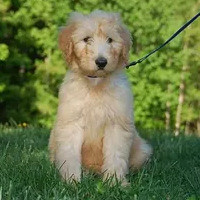
| The Petite Goldendoodle is a hybrid mix of three breeds: Golden Retriever, American Cocker Spaniel and Toy or Miniature Poodle. The initial aim of the Goldendoodle, the predecessor of the Petite Goldendoodle, was to offer a broader alternative to the popular Cockapoo. Once this was accomplished, the desire to reduce the size of the Goldendoodle was introduced and the breeding of smaller varieties of Poodle was included to produce the Petite Goldendoodle, a loving, gentle and loyal dog that can adapt to any family situation as well as being excellent service and companion dogs. |
History of the Petite Goldendoodle |
| The Petite Goldendoodle is a hybrid of the Golden Retriever, the American Cocker Spaniel and the Toy or Miniature Poodle. Unlike some hybrids, there is some historical information, but not much. Here's what we know about the hybrid dog: it originated in the USA in the early 2000s, when increased interest in combining pure breeds for various reasons became more popular. The predecessor, the Goldendoodle, is a hybrid mix of the Golden Retriever and the Poodle that was bred to reduce the size of the Golden Retriever while retaining the characteristics of both breeds. The Goldendoodle can come in different sizes depending on the size of the Poodle parent (standard, miniature or toy), the aim of the breeding was to create a larger option to the popular Cockapoo. The Goldendoodle has proven itself in the working area, being an excellent choice for guide dogs, service dogs, therapy dogs, sniffer dogs and agility training and competition. This combination also makes an excellent family dog. Interest in downsizing this larger, more wonderfully furry member of the family grew even stronger, and Petite Goldendoodle was born from the mix of Golden Retriever, American Cocker Spaniel and Poodle (miniature or toy). The result is a cute and cuddly teddy bear-like hybrid who is more than capable of any sitting-on-your-knees competition in the house. The Petite Goldendoodle hybrid itself is recognized by the Dog Registry of America. They have retained the level of intelligence and loving nature brought by the Poodle and Golden Retriever parents, capable of captivating even the hardest of hearts. |
A little of the Golden Retriever |
||
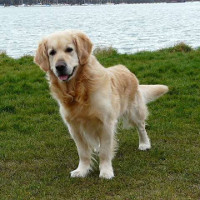
| The Golden Retriever is a gentle, loyal dog that responds well to training. Their breed began in the 19th century with a Lord Tweedmouth in Scotland, who wanted an attentive, loyal dog with the ability to retrieve waterfowl without damaging the bird. Refinements continued until it was officially named in 1920. Their ability to be both a working dog and a loyal companion was the secret of their success. In 1932, the Golden Retriever was recognized by the American Kennel Club and the breed became one of the most popular pure breeds. They are known to be great pets, devoted and loyal to their owners, and love children and clowning around with them. | ||
 |
||
| Standard of the Golden Retriever | ||
A little of the American Cocker Spaniel |
||
| The American Cocker Spaniel is closely related to the English Cocker Spaniel, and they were once considered to belong to the same breed. American Cockers are smaller and lighter than English Cockers and were bred as show dogs and companions more than anything else. English Cockers were traditionally bred for hunting and were used as hounds, taking advantage of their superior sense of smell to seek out prey in low-lying areas and hunt it for the hunter. Although the American Cocker Spaniel was once the most popular companion dog in America, it has faced stiff competition in recent years and now has a chance to make the Top 20 list. | ||
 |
||
| Standard of the American Cocker Spaniel | ||
A little of the Poodle |
||
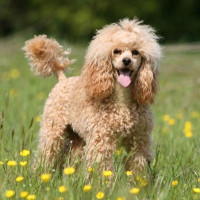
| The Poodle originated in Germany, where it was known as the Pudelhund, meaning water dog. The Poodle is thought to be descended from the North African and French Barbet, as well as the French, Russian, Hungarian, Spanish, German and Portuguese Water Dog. They are one of the oldest dog breeds and have been seen in drawings and statues from Egyptian tombs and Roman artifacts dating back to the first century. The breed was popular with duck hunters and even used to hunt truffles. Miniature and toy Poodles were later created by crossing smaller Poodle breeds. Gypsies trained these talented dogs to perform tricks and they were used as circus dogs for many years. The AKC registered the Poodle in 1887 and it is now the 7th most popular dog breed in America. | ||
 |
||
| Standard of the Poodle |
Appearance of the Petite Goldendoodle |
| Your Petite Goldendoodle hybrid can take on the appearance traits of any of its parent breeds. For the most part, they are described by breeders and owners as weighing between 7 and 11.5 kilos and standing between 25.5 and 46 centimeters tall at the shoulders. Their coats are described as medium to long, soft and wavy or curly, thick and dense. Coat colors include white, cream, apricot, gold and brown. It is considered a weak excretor and, if the Poodle parent is dominant in the biological mix, can also be hypoallergenic. He will have dark round eyes and a black nose. It will have floppy ears and a variable-length tail that can curl. |
Temperament of the Petite Goldendoodle |
| Your Petite Goldendoodle hybrid is a mix of Golden Retriever, Cocker Spaniel and Poodle and possesses some of the best temperament characteristics of all three parent breeds. Your Petite Goldendoodle has been described as protective, gentle, intelligent, bright, friendly and enthusiastic. As with almost all other canine breeds, he'll make a better pet if properly socialized at a young age, making sure he gets on well with children, strangers and other animals, and, he'll even get along with the family cat. They have been described as small dogs with big personalities, quickly attaching themselves to their human families. They are obedient and, because they have an intelligent nature, they can bridge the communication gap between dogs and humans very well, making them excellent choices for therapy dogs and great companions for the elderly. They're generally quite calm, but don't worry, they'll alert you to the presence of strangers. Because he prefers to be in the company of his beloved human family, despite the good qualities mentioned here, he doesn't hesitate to get into mischief when left to his own devices for long periods. He's easy to train, as he's a good listener and eager to please, especially when it comes to treats. |
Needs and activities of the Petite Goldendoodle |
| Your Petite Goldendoodle is a moderately active dog. He's curious and protective and will love shorter walks or jogs, playing or letting off steam in the dog park or fenced backyard, interactive fetch games, Frisbee, search and find, agility and obedience training and practice. He'll need several of these shorter walks daily as he's a small dog. His small size makes him a perfect fit for apartment or condo living, provided you can exercise him properly on a daily basis. He'll also love living in family homes with or without fenced yards, and any of these living situations can be in urban or rural settings. Moderate climates suit him best, but he'll do well in extreme temperatures if given the necessary extra protection. |
Maintenance of the Petite Goldendoodle |
| Your Petite Goldendoodle hybrid falls into the moderate maintenance category. It is considered minimal to low in the shedding category, but because its coat is long, wavy, curly and dense, it will need to be brushed at least twice a week to remove loose hairs, debris, mats and tangles. This brushing will also distribute the natural oils he needs to keep his coat soft and beautiful. He should have his ears checked once a week, cleaning them as needed with a cotton ball and an approved canine earwash solution, this could be the ideal time to check those nails and trim them if necessary, unless he's kept them worn in relation to his normal daily physical activities. Tooth brushing is recommended for almost all canines at least two to three times a week, daily is better, to prevent the development of periodontal disease and the tooth loss that can accompany it. It falls into the lower category for smell and drool. |



 English (United Kingdom)

Comments