
 |
Petite Labradoodle |
|
He is not recognized by the F.C.I. |
Origin |
Canada <> U.S.A. <> France -> U.S.A. | |
Translation |
Francis Vandersteen |
A brief presentation of the Petite Labradoodle |
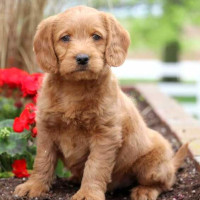
| The Petite Labradoodle is a hybrid of the Labrador Retriever, the American Cocker Spaniel and the Toy or Miniature Poodle. It's a delightful blend of fun, intelligence, affection, agility and protection in a happy little package that seems to have been created solely for companionship, guarding and belonging to a beloved family. He's also very talented, with tricks, agility, guard dog, obedience, tracking, competitive obedience and retrieving in his repertoire. And, since he's medium-sized, he'll probably try to add sitting on his knees to that list. |
History of the Petite Labradoodle |
| The Petite Labradoodle is a hybrid mix of Labrador Retriever, American Cocker Spaniel and Poodle, usually the toy or miniature version. This hybrid is a little different from the others in that the Labradoodle, a mix of Labrador and Poodle, is already a recognized and very popular designer breed. The Labradoodle hybrid is one that was developed in the 1990s and early 2000s and is currently very popular, prompting the desire for a smaller version of this fun, affectionate dog. To obtain the Petite Labradoodle, the smaller version of the already popular Labradoodle, breeders used the Labrador and Poodle, which were the Labradoodle's pedigree parents, and added the Cocker Spaniel to the biological mix. This mix of parent breeds produces a delicious blend of a variety of qualities and traits from each of the parent breeds, depending on the percentage of the mix from each parent breed. The Labradoodle, a mix of Labrador and Standard Poodle, originated in Australia and was considered hypoallergenic and, due to its size, used as a service dog in addition to family companionship, a talent discovered as a consequence of the breed's original intent and purpose. The Petite Labradoodle is recognized by the Dog Registry of America. |
A little of the Labrador Retriever |
||
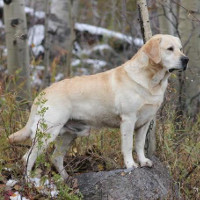
| The Labrador Retriever originated in Canada in the 1800s and was first known as the Saint John's Water Dog in the capital of Newfoundland. This big, beautiful dog helped fishermen catch fish that escaped from their nets, giving them the name Retriever, while the name Labrador came from the Labrador Sea. According to their records, they were brought to England in the early 1800s and the Earl of Malmesbury was the first to own one and discovered their excellent hunting and retrieving abilities. They almost disappeared in the 1880s when Newfoundland laws prohibited owning more than one of these dogs, but were saved by the Malmesbury family and other breeders. They were accepted into the American Kennel Club in 1917, where they are still the number-one dog breed in America. | ||
 |
||
| Standard of the Labrador Retriever | ||
A little of the American Cocker Spaniel |
||
| The American Cocker Spaniel originated in the United States. Over the centuries, the name Cocker Spaniel has been used to designate a number of small dogs and a variety of Spaniel breeds. This changed in the 1870s, when more specific breed specifications were used to characterize the breed we know today. The Cocker Spaniel was bred to be a bird dog in England and is today the smallest of the Sporting Breed group. The English Cocker Spaniel and the American Cocker Spaniel are closely related and very similar in appearance, and although both breeds are recognized by the American Kennel Club, they officially recognized them as separate breeds in 1946. The Cocker Spaniel was recognized by the American Kennel Club. in 1878 and continues today as an extremely popular dog breed, both in the show ring and in the showroom. | ||
 |
||
| Standard of the American Cocker Spaniel | ||
A little of the Poodle |
||
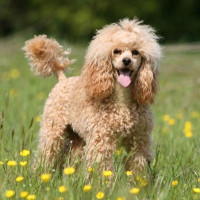
| The Poodle is available in standard, miniature and toy versions. It originated in Germany and became its own distinct breed in France. Although it may seem hard to believe when looking at the regal breed, it was bred for hunting, particularly water retrieving, even grooming the coat to enable it to move more easily through the water without being weighed down and snagged on underwater obstacles. This breed remains one of the most popular today, being hypoallergenic and low in the shedding category, making it a wonderful family companion. The Poodle breed was recognized by the American Kennel Club in 1887. | ||
 |
||
| Standard of the Poodle |
Appearance of the Petite Labradoodle |
| The Petite Labradoodle, a hybrid mix of Labrador Retriever, American Cocker Spaniel and Poodle, can inherit any combination of appearance traits from the parent breeds. It is described as measuring 30.5 to 38 centimeters and weighing 7 to 14 kilos. It has a round head with floppy ears that hang over its cheeks, deep, bright oval-shaped eyes and a black nose on a medium-sized muzzle. Its coat can be curly, medium-thick and silky to the touch, or it can be woollier and coarser, depending on which breed parent dominates the coat's bio-mix. The woolly or fleecy coat is more advantageous as it may eventually be more hypoallergenic and have less shedding. The most common colors are black, brown and golden. |
Temperament of the Petite Labradoodle |
| Your Petite Labradoodle is a hybrid mix of Labrador Retriever, American Cocker Spaniel and Poodle. As such, it can inherit any combination of personality and temperament traits from the parent breeds. Owners and breeders of the Petite Labradoodle describe this fun-loving little bundle as very affectionate and gentle, as well as active, playful, loyal, confident, never aggressive, sensitive, intelligent, lively and easy to train. It's this combination of personality traits that enables it to perform exceptionally well as an assistance dog. Like most other canine breeds, socialization at an early age will ensure that he'll be great with children, although some supervision is suggested when he's playing with smaller children. What's more, this early socialization will help him get along with other pets and even the family cat. He is a good watchdog and may be wary of strangers until he is convinced that the stranger is not a threat or danger to the human members of his family. He is intelligent and eager to please, which makes him quite easy to train with positive training methods. |
Needs and activities of the Petite Labradoodle |
| Your Petite Labradoodle hybrid is an active little dog. He'll love those long walks and jogs with extra playtime in the dog park or fenced-in backyard. Other favorite activities include interactive games of fetch, Frisbee and flying ball, plus obedience and agility training and practice. He has a high hunting instinct, so it's highly recommended that when walking or playing with this fun-loving family member outside the house or other enclosed space, you keep him on a leash, unless it's part of the planned exercise routine. as you chase him around the neighborhood, following that interesting little animal or scent wherever it leads you. This is a smaller dog, so he'll be perfect for apartment or condo living, provided his exercise needs are met daily. He can also live in a family home with or without a fenced yard in an urban or rural setting. It is best suited to more moderate climates, but can live in hotter or colder climates if sufficiently protected from extremes of temperature. |
Maintenance of the Petite Labradoodle |
| Your Petite Labradoodle hybrid family member is considered to be in the moderate maintenance category. This will require him to be brushed daily to remove loose hairs, debris, tangles and mats from his luxuriant curly or wavy coat, bathing only as necessary to preserve the vital oils needed for his beautiful coat. He can be a minimal excretor with periodic increases in shedding and, if he inherits most of his coat attributes from the Poodle parent, he will be more hypoallergenic. But this, of course, can vary depending on which breed parent has the most influence on the coat's bio-mix. He'll need to have his ears checked weekly, and cleaned as needed with a cotton ball and an approved canine earwash solution. While you're checking his ears, take a look at his nails every week, trimming them if necessary, unless he's keeping them worn down from his daily physical activities. Tooth brushing is recommended for almost all canine breeds at least two to three times a week to prevent the development of periodontal disease and accompanying tooth loss. It falls into the lower category for odor and tendency to drool, again, depending on the breed's parents' biological mix. He's an active little bundle, so daily exercise will be necessary to keep him healthy, happy and fit. |



 English (United Kingdom)

Comments