 |
Rottaf |
|
He is not recognized by the F.C.I. |
Origin |
Germany <> Afghanistan -> U.S.A. | |
Translation |
Francis Vandersteen |
A brief presentation of the Rottaf |
| The Rottaf is a hybrid dog. Its parent breeds are the Rottweiler and the Afghan Greyhound. The Rottaf is a large dog that will weigh over 30 kilos when fully grown. It will have a dense coat of silky fur that requires little grooming. They are rather active dogs. He can be somewhat exposed and is not considered suitable for children. With proper socialization, however, it is possible to help the Rottaf get used to children. Strangers, however, are another story. The Rottaf makes an excellent watchdog. He will need regular exercise to maintain a healthy weight as well as keeping him out of trouble. Patience is required when training the Rottaf. He's not too difficult to train, but he may take longer than other breeds to be fully broken in. |
History of the Rottaf |
| The Rottaf is a rare hybrid dog. Although there isn't much information on the Rottaf hybrid breed itself, we can still examine the history of the parent breeds to determine the Rottaf's origins. |
A little of the Rottweiler |
||
| The Rottweiler originated in Germany. It is probably descended from Molossus, a Mastiff-type dog that was known as a war dog by the Romans. As the Roman army moved through various territories, the Molossus mingled with local dogs. It is thought that the Molossus mixed with local German dogs to provoke the breed we know as the Rottweiler. Rottweilers were used to herd cattle in farming villages. In fact, some caressers would put their money in a pouch around the Rottweiler's neck so as not to be robbed. However, when the railroads replaced cattle on foot, the Rottweiler almost became extinct. In 1901, a Rottweiler and Leonberger Club were founded and the breed standard was established. The Rottweiler became involved in police work, a job for which the Rottweiler is well suited. Most likely, the first Rottweiler came to the USA with a German emigrant in the 1920s. After the Second World War, the Rottweiler's popularity exploded. In fact, it was extremely popular until the mid-1990s, when bad publicity had an effect on demand for the breed. | ||
 |
||
| Standard of the Rottweiler |
A little of the Afghan Greyhound |
| The Afghan Greyhound originated in Afghanistan. Thought to be one of the oldest dog breeds, DNA evidence suggests that the breed is at least 2,000 years old. An English officer stationed in Kabul established a kennel during his stay, and brought his dogs back to England in 1925. Although most aren't sure of the exact timing and situation, the Afghan Greyhound made its way to America. We know that Zeppo Marx, of the infamous Marx brothers, brought one of the first Afghan Greyhounds to the United States. The American Kennel Club began recognizing the breed in 1926. The Afghan Greyhound is probably most famous for its representation as the iconic Barbie Dog Beauty. |
 |
| Standard of the Afghan Greyhound |
Appearance of the Rottaf |
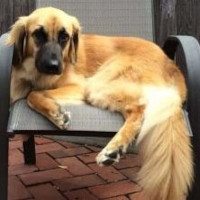
| The Rotaff will be a large dog. At maturity, it will weigh at least 30 kilos. More than likely, a male will weigh over 43 kilos. He'll also be rather tall. Most Rotaffs measure at least 56 centimetres in height. He may be one of a variety of colors. He may be black and white, or black and tan. It can be brown or black all over. He may inherit tan markings above his eyes like the Rottweiler parent. His coat will be dense and his hair is likely to be short. He will have a muscular build. His tail may be long like the breed of Afghan Greyhound parents, or may be short like the breed of Rottweiler parents. His chest will be broad and deep. His ears will probably be of medium length, and he may have feathering on his legs and ears. The texture of its hair will be silky, and some compare it to human hair. |
Temperament of the Rottaf |
| The Rottaf is a reserved dog. Because of its Rottweiler parentage, it will probably have to be with someone and decide that a new person is “okay” before it will accept a stranger. Even the Afghan Greyhound part generally dislikes strangers. He may even be a family dog. He may shun or ignore visitors. He can be described as an “independent thinker”. This often makes him difficult to train. However, patience and perseverance are essential when working with the Rottaf. He's very intelligent, but it can be tricky to understand why he needs to do something you want him to do. Even well-trained Rottaf can refuse to cooperate until they understand how actions can benefit them. Surprisingly, food doesn't always motivate the Rottaf. Repetition is the key to successful Rottaf training. |
Needs and activities of the Rottaf |
| The Rotaff will be a moderately active dog. However, he's not necessarily a dog you can let loose in the yard for a game of fetch. He'll do best in a house with a fenced-in yard, with a fence over 1.80 meters high to make sure he doesn't jump over it. The breed of Afghan Greyhound parents is known to scale fences and, once he's out of the fence, he'll run and can be almost impossible to catch. He'll enjoy a walk with you around the neighborhood, but he should remain on leash at all times. The dog park is not the best place for the Rottaf. His personality is simply not conducive to being with lots of strange dogs at the same time. Don't forget that the Rottaf needs sufficient exercise not only to maintain a healthy weight, but also to prevent him from getting into mischief. |
Maintenance of the Rottaf |
| The Rottaf won't require much maintenance. Brushing it once a week should be enough to get rid of any excess hair. However, he may tend to shed more in spring and autumn, like most dogs. During heavy weather, brush him two or three times a week. Note: it's also important to get the Rotaff used to a grooming routine. While the breed of Afghan Greyhound parents is accustomed to grooming, the Rottweiler can be quite sensitive to touch. Start a grooming routine when your Rotaff is young, so he'll be comfortable with the regimen as he gets older. Brush his teeth two or three times a week to prevent bad breath and tartar build-up. To prevent tooth decay, brush daily. Clip his nails every two or three weeks, especially if you can hear them clicking as he walks. |



 English (United Kingdom)

Comments