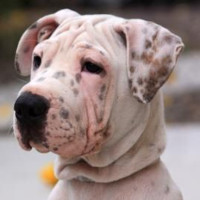
 |
Sharmatian |
|
He is not recognized by the F.C.I. |
Origin |
China <> Croatia -> U.S.A. | |
Translation |
Francis Vandersteen |
A brief presentation of the Sharmatian |
| The Sharmatian is a medium to large dog with a life expectancy of 10 to 12 years. They are friendly, affectionate dogs that make excellent pets. He gets on well with children and other pets, provided socialization and training take place from the outset. Young children should always be supervised in the presence of dogs, including the Sharmatian. These dogs are energetic and love to go out with the family. They can spend some time alone, but prefer to be surrounded by their family. They are also intelligent and quick to learn what is expected of them. They are ideal for new dog owners. Common colors are white, black, red, fawn and cream. Their short coats are easy to care for. |
History of the Sharmatian |
| The Sharmatian is a hybrid breed of Shar Pei and Dalmatian. |
A little of the Shar Pei |
||
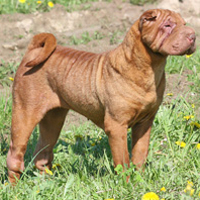
| The Shar Pei is known for its characteristic deep wrinkles and blue-black tongue. Its name translates as “sandy skin”, in reference to its short, bristly coat. It was bred as a guard dog in China, and some believe it to be an ancient breed. They were later used in combat, where the loose folds of their skin were said to give them an advantage because they were able to twist in their skin to bite an assailant back. The breed almost became extinct when China became a communist country and a massive tax was levied on dog owners. It was only thanks to Hong Kong breeder Matgo Law, owner of Down-Home Kennels, that they survived. He wrote a letter asking breeders in other countries to take some of the dogs. Many breeders responded to the appeal, including some from the USA, and the Shar Pei has since become very popular in that country. The breed was officially recognized by the American Kennel Club in 1992. | ||
 |
||
| Standard of the Shar Pei |
A little of the Dalmatian |
| The Dalmatian is also known as the English carriage dog, cart dog, plum pudding dog and spotted dog, but little is known about its origins. Similar types of spotted dogs have been found painted on the walls of Egyptian tombs, running behind carriages. They also traveled with the Romans. In late 18th-century England, a spotted dog called Talbot Hound ran alongside horse-drawn carriages to guard passengers. It was later named Dalmatian in 1791 by Thomas Bewick. Some say the breed got its name in Dalmatia, now Croatia, where they were used as guard dogs. In the United States, these dogs are best known as fire dogs. They ran behind fire trucks and even rescued people from burning buildings. Disney's “101 Dalmatians” made the breed instantly recognizable, but eventually led to many dogs being abandoned in shelters. People rushed out to buy one, then realized they were a lot of work and got rid of them. The Dalmatian was officially recognized by the American Kennel Club in 1888. |
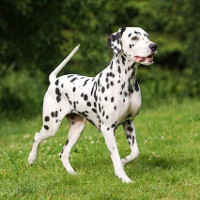 |
| Standard of the Dalmatian |
Appearance of the Sharmatian |
| The Sharmatian is a medium to large dog weighing up to 27 kilos and measuring up to 61 centimeters. Common colors are white, black, red, fawn and cream. It has a short coat that can be soft or rough. The two parent breeds are probably among the most recognized in the world. The Dalmatian's unique spots, which only appear after three or four weeks of birth, and the Shar Pei's deep wrinkles and blue-black tongue are unmistakable. The Sharmatian is likely to have a combination of these characteristics. The Dalmatian has a very soft coat and velvety ears, as well as a long tail, while the Shar-Pei has a spiny coat to the touch, a broad head and small triangular ears that lie flat on the head. It also has a hippopotamus-like snout and a high tail. |
Temperament of the Sharmatian |
| With its affectionate, friendly and playful personality, the Sharmatian makes an excellent family pet. With early socialization and training, it adapts well to older children and other pets. They can be left alone for short periods, but do best in a home where someone is at home for most of the day. They are not known to bark much, but will bark if a stranger approaches and are known to be good watchdogs. Their appearance can also be rather imposing, but they rarely show aggression. They are relatively easy to train due to their intelligence, but do not respond well to harsh words. For best results, praise and spoil them. They also do best with a firm, confident and consistent master. These dogs have high energy levels and like mental and physical stimulation to keep them from getting bored. |
Needs and activities of the Sharmatian |
| The Sharmatian is an energetic dog that loves to be outdoors. He makes an excellent running or hiking companion, and will also enjoy a trip to the beach or dog park. If your pet has the Shar Pei's shorter nose, make sure it gets plenty of exercise in hot weather, as it can suffer from heat stroke. The Sharmatian also likes to play with other dogs, so is best suited to families with enclosed gardens. He's too big to live in an apartment, as he needs space to run around. Your dog will do best if he gets enough exercise - these dogs can develop bad habits if they don't get out enough. |
Maintenance of the Sharmatian |
| The Sharmatian's short coat is fairly easy to care for, and it's not known for excessive shedding. A weekly brushing should be enough to keep your pet in good shape and rid it of any loose hair. These dogs are prone to skin problems. So be sure to use only veterinary shampoos when bathing them. They don't need to be bathed regularly, as this can irritate their skin. If your pet has deep Shar Pei wrinkles, keep them clean and dry. Also check that the ears are not dirty, and wipe them gently if necessary. Try to brush your dog's teeth regularly to prevent dental problems and bad breath, and trim his nails if they don't wear down on their own. |



 English (United Kingdom)

Comments