
 |
Ganaraskan |
|
He is not recognized by the F.C.I. |
Origin |
France / Belgium <> Germany <> France <> U.S.A. -> Canada | |
Translation |
Francis Vandersteen |
A brief presentation of the Ganaraskan |
| In the late 1970s, a group of breeders tried to create the ideal therapy dog, using small, low-shedding dogs such as the Bichon Frise, Miniature Schnauzer and Poodle, as well as the American Cocker Spaniel, another small dog known for its trainability and gentle nature. The result is a carefree little dog that is generally friendly to everyone and generally has a coat that is considered hypoallergenic. They were originally developed as therapy dogs, but have also proved to be extremely pleasant pets. Although this developing breed has not yet been recognized by the Canadian Kennel Club, it is gaining in popularity and prestige. |
History of the Ganaraskan |
| The Ganaraskan dog has been a developing breed in Ontario, Canada, since the second half of the 1970s. A group of breeders who lived in the Ganaraska River area of Point Hope, Ontario, decided to try to breed an ideal therapy dog that was intelligent and friendly, while provoking little or no reaction in most allergy sufferers. They chose four breeds as their base, the Bichon Frise, Miniature Schnauzer, English Cocker Spaniel and Poodle, all of which are small dogs known for their friendliness and trainability. These characteristics also make them excellent pets that can thrive in any size home and get on well with adults and children alike, and they have quickly become very popular with the general population. The breed also made a big splash when a Ganaraskane named Molly, suffering from a heart condition known as patent ductus arteriosus, underwent successful fluoroscopic surgery, enabling her to live a long and healthy life. All Ganaraskan dogs are registered through the Canadian Ganaraskan Breeders Association as well as the Canadian Identification Project, which is based in Ottawa, and in 2012 Bernard Gil of Point Hope filed an application to register the name Ganaraskan as a trademark for a new breed of dog, with a current status of "Interruption of Proceedings". The breeders' association is still in the process of qualifying as an official breed with the Canadian Kennel Club, a process involving the breeding program being overseen over several generations by the Ministry of Agriculture. |
A little of the Bichon frise |
||
| The Bichon frise is a Mediterranean dog, like its cousins the Coton de Tuléar, the Bolognese, the Maltese and the Havanese. They are all related to the Barbet. Once in Europe, they were favored by the nobility, and when the trend changed, they became street and circus performers. Today, they perform, and very well, in the competition ring. Wonderful companions, they were registered by the American Kennel Club in 1972. | ||
 |
||
| Standard of the Bichon frise | ||
A little of the Miniature Schnauzer |
||
| The Miniature Schnauzer is one of three types of Schnauzer, the other two being the Standard and the Giant. These dogs come from Bavaria in Germany and were used as farm dogs. They were versatile workers, rounding up animals, catching rats and guarding animals and property. To make the Standard Schnauzer more compact, they were bred with the Poodle and Affenpinscher to create the Miniature Schnauzer. | ||
 |
||
| Standard of the Miniature Schnauzer | ||
A little of the Poodle |
||
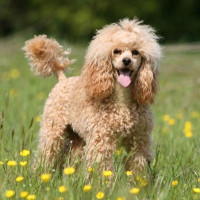
| The Standard Poodle is one of three variants of the Poodle breed, the other two being the Miniature and Toy. The Poodle is undoubtedly the most popular choice of dog for creating specific crossbreeds. This is not only because they come in three different sizes, but also because they tend to have soft fur and a gentle, intelligent nature. Poodles have been around since the 15th century and are descended from the French Barbet, a water dog. Although the Poodle is mistakenly thought to be a French breed in its own right, experts agree that it originated in Germany, where it was used for duck hunting. | ||
 |
||
| Standard of the Poodle | ||
A little of the American Cocker Spaniel |
||
| The American Cocker Spaniel is closely related to the English Cocker Spaniel, and they were once considered to belong to the same breed. American Cockers are smaller and lighter than English Cockers and were bred as show dogs and companions more than anything else. English Cockers were traditionally bred for hunting and were used as hounds, taking advantage of their superior sense of smell to seek out prey in low-lying areas and hunt it for the hunter. Although the American Cocker Spaniel was once the most popular companion dog in America, it has faced stiff competition in recent years and now has a chance to make the Top 20 list. | ||
 |
||
| Standard of the American Cocker Spaniel |
Appearance of the Ganaraskan |
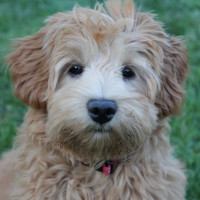
| The Ganaraskan is a small breed of dog, generally between 7 and 8 kilos and around 35.5 to 40.5 centimeters at the withers when fully grown. There may be variations as this is still a developing breed, but in general, they are small, well-built dogs that tend to be slightly longer than they are tall, with a muzzle a little shorter than their somewhat rounded skull. They have round eyes that are usually dark in color with a bright, inquisitive expression, and short, triangular ears that sit high on the skull and fold forward, with tips that usually hang just below the eye line. In most cases, they have a medium-length wavy coat that comes in many different colors and is often considered hypoallergenic. Many Ganaraskan dogs also have the distinctive eyebrows, moustache and beard they inherited from their Miniature Schnauzer heritage, and their tails may be long, with a slight curve, or they may curl tightly over the back. |
Temperament of the Ganaraskan |
| This breed was originally developed as the ideal therapy dog, requiring a very specific set of personality traits. They are generally small, lively dogs with an exceptional ability and desire to learn, combined with a patient, responsive nature. While it is important for the health and safety of the dog to closely monitor any interaction between these dogs and young or boisterous children due to their small size and tolerant, playful nature, they also make excellent family companions, getting on well with adults and children alike. They generally integrate well with other dogs and have a fairly low prey drive, making them good companions for homes with cats and other small animals. This emerging breed doesn't make a good watchdog, however, as they tend to love everyone they meet and are more likely to welcome a stranger into your home than display territorial behavior. |
Needs and activities of the Ganaraskan |
| Although Ganaraskan dogs are generally lively and playful, they are also very happy to spend a quiet evening at home. They still need daily exercise, at least a few short walks, but they can often expend quite a lot of energy playing indoor games and are not prone to barking, making them exceptional dogs for people living in apartment buildings. They are also highly intelligent dogs, regularly requiring mental stimulation, and can excel in activities such as obedience and agility. It's important to properly equip your dog when exercising in cold weather, as its single-layer coat makes it more sensitive to temperature drops. |
Maintenance of the Ganaraskan |
| This breed requires more grooming than many other breeds, as it has fine, wavy hair that tends to tangle and twist if not cared for properly. Although the coat can be left in its natural state, many pet parents choose to have their Ganaraskan's coat trimmed for added convenience, either by doing it themselves or entrusting the job to a professional groomer. Daily brushing is necessary to remove not only mats and tangles, but also dirt and debris that may have accumulated. Their coats have only one layer, rather than two, making them more sensitive to the cold. A monthly check-up of the length and preparation of the nails to be trimmed, as well as teeth-brushing sessions three times a week, are recommended. |



 English (United Kingdom)

Comments